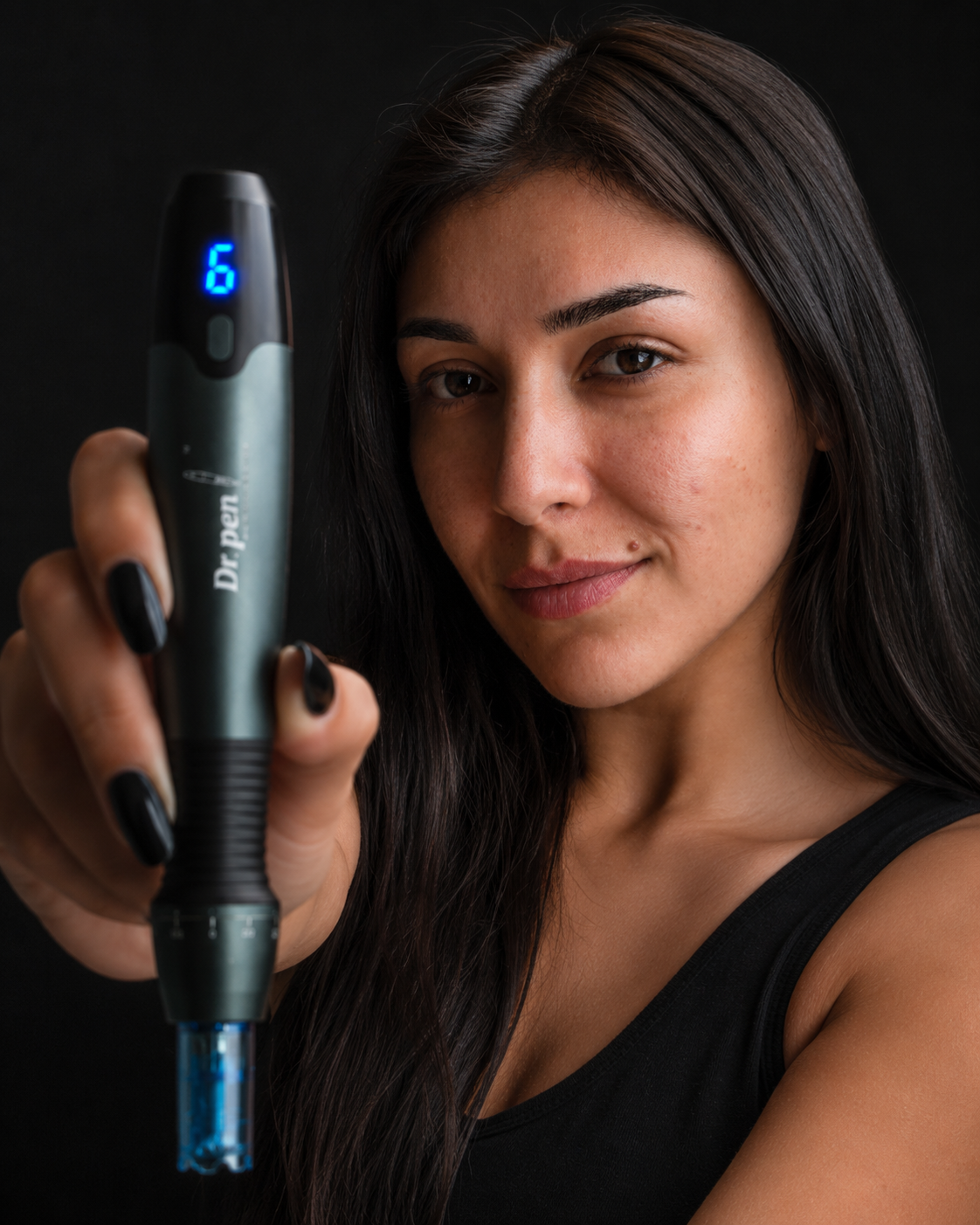
SkinPen microneedling and at-home pens are often grouped together because they use the same basic idea: tiny, controlled needle channels that trigger the skin’s repair response. In practice, they are not interchangeable.
SkinPen is typically an in-office professional treatment performed by a trained provider. At-home microneedling pens, including Dr. Pen devices, put more control in the user’s hands and require a much more conservative approach. The right choice depends on your skin concern, budget, risk tolerance, comfort with aftercare and whether you need professional supervision.
This comparison breaks down the real differences so you can decide whether SkinPen microneedling, an at-home pen or a combined approach makes the most sense.
The quick answer
Choose SkinPen microneedling with a licensed provider if you want a clinical treatment plan for acne scars, more advanced texture concerns, skin type risks, pigment concerns or if you are unsure whether microneedling is appropriate for your skin.
Choose an at-home microneedling pen if your skin is healthy, you are comfortable following strict hygiene rules and your goals are more modest, such as cosmetic maintenance, smoother-looking texture or supporting a skincare routine over time.
Neither option is risk-free. The main difference is control. With SkinPen, the provider controls the assessment, treatment plan, depth and sterile setup. With an at-home pen, you control everything, which means your technique, cartridge choice and aftercare matter much more.
What SkinPen microneedling actually is
SkinPen is a professional microneedling device used in clinical settings such as dermatology offices, med spas and aesthetic clinics. The treatment is usually performed after a consultation, skin assessment and discussion of your medical history, medications, scar type and healing risks.
A professional SkinPen session may be selected for concerns such as acne scarring, uneven texture and signs of aging, depending on the provider’s evaluation and the device’s intended use. The FDA has published consumer guidance on microneedling device benefits, risks and safety, including potential risks like infection, pigment changes, allergic reactions and scarring when devices are not used properly.
SkinPen is not a generic name for every microneedling treatment. It is a specific professional device category, and any FDA clearance applies to specific devices and indications. That matters because a clinic treatment, a consumer pen and a counterfeit device should not be treated as equivalent just because they all involve needles.
The biggest advantage of SkinPen microneedling is supervision. A trained provider can decide whether you are a good candidate, adjust treatment intensity and give post-care instructions based on your skin. That does not eliminate risk, but it reduces guesswork.
What at-home microneedling pens are
At-home microneedling pens are handheld motorized devices used with disposable needle cartridges. They create controlled micro-channels in the outer layers of skin. The same biological principle is involved, but the context is different: the user is responsible for device setup, cartridge selection, treatment pressure, hygiene, frequency and aftercare.
Dr. Pen devices are popular because they make microneedling more accessible for experienced skincare users who want a flexible routine. They are not a shortcut around safety. A home pen should be used conservatively, on appropriate skin and only with compatible sterile cartridges.
If you want a deeper explanation of the mechanism, Dr. Pen Store’s guide to how microneedling pens work explains micro-channel creation and the skin repair response in more detail.
At-home pens are best thought of as a controlled skincare tool, not a replacement for medical care. They may suit cosmetic maintenance, gradual texture refinement and users who already understand aftercare. They are a poor fit for active acne, open wounds, active infections, irritated skin or anyone with a history of abnormal scarring unless a qualified professional says otherwise.
SkinPen microneedling vs at-home pens: side-by-side comparison
| Factor | SkinPen microneedling | At-home microneedling pens |
|---|---|---|
| Setting | Clinic, med spa or dermatology office | Home environment controlled by the user |
| Operator | Licensed or trained provider | Consumer or skincare professional using their own device |
| Skin assessment | Usually performed before treatment | User must self-screen or seek outside advice |
| Treatment intensity | Provider-controlled and often more targeted | Should be conservative and instruction-based |
| Best suited for | Clinical treatment plans, acne scars, more advanced texture concerns | Cosmetic maintenance, mild texture goals, experienced users |
| Sterility controls | Clinic protocols and professional supplies | User must manage hygiene and use sterile single-use cartridges |
| Cost structure | Pay per session or package | Device purchase plus replacement cartridges and skincare |
| Convenience | Appointment-based | Flexible timing at home |
| Risk management | Provider monitors candidacy and response | User must recognize contraindications and warning signs |
| Results expectation | Often more structured and treatment-plan based | More gradual and dependent on consistency, technique and skin response |
The table shows why the decision is not simply professional equals better or home equals cheaper. It is about matching the tool to the concern and the person using it.
Safety is where the difference matters most
The real dividing line between SkinPen microneedling and at-home pens is not the needle concept. It is the safety system around the device.
In a clinic, the provider should screen your skin, use appropriate supplies, work in a controlled environment and give you a recovery plan. At home, you must create that system yourself. That includes using a genuine device, checking cartridge compatibility, handling sterile cartridges correctly, treating clean skin and stopping if your skin reacts badly.
Microneedling should not be done over active acne lesions, cold sores, rashes, broken skin, sunburn, irritated skin or any suspected infection. People with a history of keloids, poor wound healing, immune suppression, recent isotretinoin use or certain medical conditions should speak with a medical professional before considering microneedling.
| Safety factor | Why it matters | At-home takeaway |
|---|---|---|
| Cartridge sterility | Needles enter the skin barrier | Use a new sterile cartridge every session and never share cartridges |
| Device authenticity | Counterfeit devices may have poor build quality or unreliable cartridges | Buy from a source that focuses on genuine devices and compatible cartridges |
| Treatment frequency | Over-treating can damage the skin barrier | Follow device instructions and allow full recovery between sessions |
| Skin condition | Inflamed or compromised skin is more reactive | Do not microneedle irritated, infected or actively breaking-out skin |
| Aftercare | Fresh micro-channels increase sensitivity | Keep post-care simple and avoid harsh actives until skin has recovered |
If you are unsure whether at-home microneedling is appropriate, review a safety-focused guide such as Microneedling at Home: Is It Safe to Do Yourself? before choosing a device.
Results and downtime: what to expect
Professional SkinPen microneedling is often chosen when the goal is visible change through a structured plan. For example, acne scarring or more noticeable texture concerns may require multiple professional treatments spaced over time. Collagen remodeling is gradual, so the final result is not judged the next morning.
At-home pens can still be useful, but expectations should be more modest. Many users choose them for ongoing texture support, smoother-looking skin and a more consistent self-care routine. Results depend heavily on using the right cartridge, avoiding excessive pressure, respecting recovery time and choosing suitable skincare afterward.
Downtime also varies. A professional SkinPen session may cause redness, tightness, warmth and sensitivity for a few days, depending on treatment intensity and your skin. At-home treatments should generally be milder when used responsibly, but irritation can still happen if you treat too aggressively or too often.
For a more detailed healing window, Dr. Pen Store’s SkinPen before and after timeline explains how skin can look immediately after treatment, during early recovery and through the collagen remodeling phase.

Cost and convenience
SkinPen microneedling usually costs more per treatment because you are paying for the provider’s time, clinic environment, professional supplies and treatment planning. Many people need a series of sessions, so the total cost can add up. For users with acne scars, pigment concerns or sensitive skin histories, that professional oversight may be worth it.
At-home pens have a different cost profile. You buy the device once, then continue purchasing compatible replacement cartridges and suitable skincare. Over time, the per-session cost can be lower, especially for maintenance routines. The tradeoff is that you are responsible for using the device correctly.
Convenience is the clearest advantage of at-home pens. You can plan treatments around your own schedule and do not need to book repeated appointments. That convenience should not encourage casual use. Microneedling is still a skin-penetrating procedure, so it deserves the same level of preparation every time.
There is also a hidden cost to poor purchasing decisions. A cheap counterfeit pen, incompatible cartridge or reused needle cartridge can turn an affordable routine into a skin problem. For at-home users, buying genuine devices and the correct cartridges is part of the safety plan, not just a shopping preference.
Which option fits your goal?
| Your situation | Better fit | Why |
|---|---|---|
| You have acne scars or more advanced texture concerns | SkinPen or another professional treatment | A provider can assess scar type, skin type and treatment intensity |
| You want gentle cosmetic maintenance | At-home pen | A conservative home routine may be more convenient and cost-effective |
| You have darker skin prone to post-inflammatory hyperpigmentation | Professional consultation first | Treatment depth, inflammation and aftercare need careful planning |
| You are new to microneedling | Professional treatment or extensive education first | Technique and contraindications matter |
| You already had professional treatments and want maintenance | Possible combined approach | Use at-home treatments only when your provider says your skin is ready |
| You have active acne, irritation or a skin infection | Neither until cleared | Microneedling compromised skin can worsen problems |
A combined strategy can work for some people. For example, a provider may perform a professional series, then you may use an at-home pen later for maintenance once your skin has fully healed and you have clear guidance. Do not microneedle at home too soon after a professional treatment, and do not stack treatments because you want faster results.
If you choose an at-home Dr. Pen, buy and use it carefully
If the at-home route fits your goals, your device and cartridges matter. Look for a genuine Dr. Pen device, model-specific replacement cartridges and clear instructions. Dr. Pen Store focuses on original Dr. Pen microneedling devices, cartridges and related skincare, which is especially relevant if you are comparing models or replacing cartridges for an existing pen.
Use this buyer checklist before you start:
- Choose a genuine device from a reputable source rather than an unknown marketplace listing.
- Confirm the exact cartridge type for your model before purchasing replacements.
- Use a new sterile cartridge every session and dispose of it after use.
- Keep your routine conservative, especially if you are new to microneedling.
- Avoid strong exfoliants, retinoids and irritating actives around treatment unless a professional has advised otherwise.
- Stop if you notice unusual pain, prolonged redness, swelling, pus, blistering or signs of infection.
If you are buying your first pen, compare devices based on how you will actually use them: comfort, cartridge availability, authenticity, support and whether the model suits your experience level. The most advanced-looking device is not always the best choice for a beginner.
Bottom line: SkinPen is supervision, at-home pens are responsibility
SkinPen microneedling is usually the better fit when you want professional evaluation, a structured treatment plan or help with more advanced concerns. At-home pens can be a practical option for suitable users who want convenience and gradual cosmetic maintenance, but they demand strict hygiene and realistic expectations.
If you are choosing between the two, start with your skin concern rather than the device. Scars, pigment risk, medical history and uncertainty point toward a professional consultation. Healthy skin, modest goals and a disciplined routine may make an at-home Dr. Pen a reasonable choice.
Frequently Asked Questions
Is SkinPen microneedling better than at-home pens? SkinPen is better for professionally planned treatments and more complex concerns, while at-home pens may be better for conservative maintenance and convenience. The best choice depends on your skin, goals and ability to follow safety steps.
Can I get SkinPen-level results at home? Usually not. Professional SkinPen treatments are performed by trained providers who can assess the skin and control treatment intensity. At-home pens should be used more conservatively, so results are typically more gradual.
Are at-home microneedling pens safe? They can be appropriate for some users when used correctly with sterile single-use cartridges, clean technique and conservative settings. They are not suitable for everyone, especially people with active skin conditions, infection risk or a history of abnormal scarring.
How often should I use an at-home microneedling pen? Follow the instructions for your specific device and cartridge type. Do not treat skin that is still red, irritated, peeling or sensitive from a previous session. More frequent treatment does not mean better results.
Can I combine SkinPen treatments with an at-home Dr. Pen? Some people use professional treatments for a main series and at-home pens later for maintenance, but only after the skin has healed and a qualified provider says it is appropriate. Do not overlap treatments too closely.
What should I buy if I choose at-home microneedling? Start with a genuine microneedling pen, compatible sterile replacement cartridges and simple aftercare products. Avoid counterfeit devices, reused cartridges and harsh skincare around treatment days.
Ready to compare genuine at-home microneedling options?
If you decide an at-home pen fits your goals, browse Dr. Pen Store for genuine Dr. Pen devices, compatible replacement cartridges and skincare products designed to support a responsible routine. When in doubt, choose the safer path: get professional advice first, then build your microneedling setup around your skin’s needs.