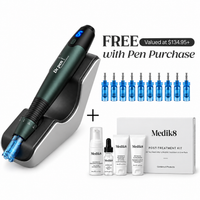
Want the device and essentials in one route?
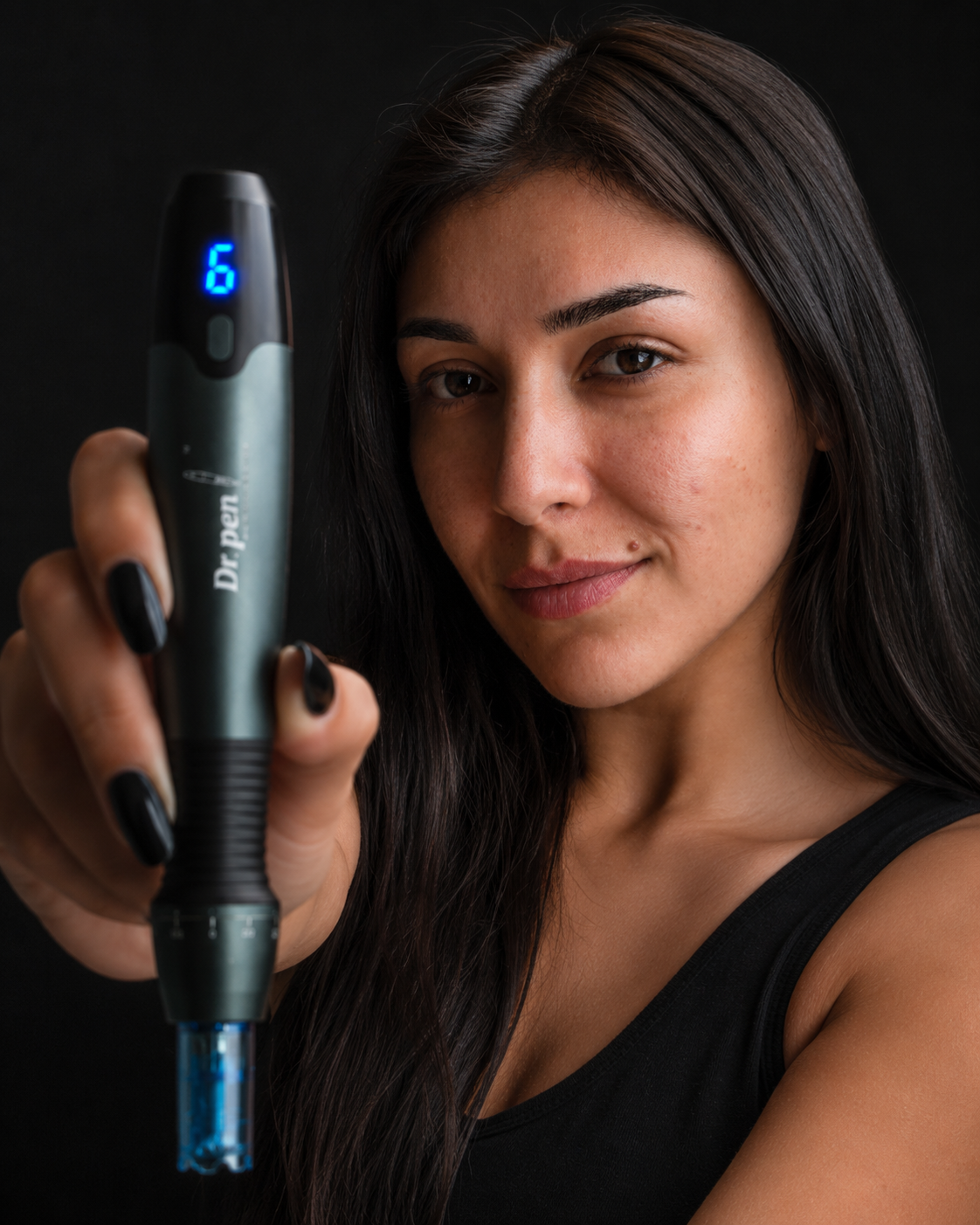
If you are reading this guide before buying your first pen, the M8 Starter Kit is the simplest shopping route here: a device-led bundle instead of building a setup from separate products.
A complete Dr. Pen microneedling instruction guide covering preparation, fresh-cartridge safety, device setup, common mistakes, aftercare, contraindications and the fastest route to the correct Dr. Pen or replacement cartridges.
Microneedling is not suitable for everyone. The FDA recommends discussing benefits and risks with a trained health-care provider, and says FDA-authorized microneedling medical devices are not authorized for over-the-counter sale. Home-use cosmetic products and medical microneedling devices are not the same regulatory category.
Start with suitability and hygiene, not depth. Use a fresh compatible cartridge for every session, follow the instructions for your exact model, work in small controlled areas with light pressure, and allow the skin to recover before reintroducing irritating products or repeating a session.
Start by confirming microneedling is suitable for you. Cleanse the treatment area, prepare a clean workspace and open a brand-new cartridge that is compatible with your exact Dr. Pen model. Attach it without touching the needle surface, check your device instructions and use controlled, conservative settings rather than chasing maximum depth or bleeding. After the session, dispose of the cartridge, keep the area clean and calm, protect it from unnecessary irritation and sun exposure, and seek medical advice if symptoms are severe or getting worse.
This page should answer the question and make the next purchase decision easier. Product recommendations appear only where they match the section you are reading.
If you are reading this guide before buying your first pen, the M8 Starter Kit is the simplest shopping route here: a device-led bundle instead of building a setup from separate products.
Competitor guides often jump straight to pin counts and millimetres. This guide starts with the safety rules that apply regardless of which Dr. Pen model you own.
The FDA specifically warns against reusing microneedle cartridges because reuse can spread infection. Cleaning a used cartridge does not make reuse acceptable.
Do not choose a cartridge because it says 12-pin, 18-pin or Nano. First confirm that the cartridge family physically matches your exact Dr. Pen model.
Skin thickness, treatment area, device design, cartridge, pressure and intended use all matter. A universal depth number is not a safe substitute for model-specific instructions.
Bleeding can occur with microneedling, but it is a known risk — not a success metric. Severe pain, heavy bleeding or rapidly worsening irritation are reasons to stop.
Use this preparation checklist before you open the cartridge. A clean, organised setup makes it easier to avoid touching the needle surface or improvising halfway through.
Use a brand-new sealed cartridge and follow the operating instructions supplied with your exact Dr. Pen model. If anything looks damaged, contaminated or does not fit securely, stop.
Use the sequence below as a general handling guide. Your model instructions take priority for cartridge fitting, controls and intended use.
Open the sealed cartridge immediately before use and attach it according to the instructions for your exact Dr. Pen model.
Confirm how your model controls speed and depth. Start conservatively and stay within the device's intended operating instructions.
Keep handling controlled, use light pressure and avoid repeatedly overworking one area. Do not treat broken, infected or actively inflamed skin.
Redness, tightness, discomfort, bruising and some bleeding are recognised microneedling side effects, but more visible trauma does not automatically mean a better result.
One of the most common buyer mistakes is choosing a cartridge by pin count without checking the connector family. Use your exact model to reach the correct cartridge collection.
A20 uses its own dedicated cartridge platform. Do not assume cartridges from M8S, A11 or older Dr. Pen families will fit.
Match M8S first, then choose the cartridge type you need. The live M8S collection includes multiple microneedle and Nano options.
Use cartridges specifically listed for A11. Confirm model compatibility before you choose Nano or a needle pin count.
M8 and M8S are different models. Do not treat their cartridge names as interchangeable without checking the compatibility listing.
H6 uses a separate Hydra cartridge system, including infusion-style microneedle and Nano options. Match the H6 platform before choosing the tip.
The A8S cartridge collection includes several pin counts and Nano options. Confirm the A8S family before buying.
Hydra Pen H3 uses a different cartridge format from standard Dr. Pen families. Use the H3-specific route where available.
Do not guess. Open the full cartridge range or compatibility guide and confirm your exact device model before ordering.
Search results are full of universal millimetre charts. The more useful answer is that actual suitability depends on the device, intended use, body area, skin condition and user training. Maximum device depth is not a recommendation.
Different Dr. Pen models, cartridges and treatment areas behave differently. If you are considering deeper microneedling, treating scars or using a medical-device setting, professional assessment is safer than copying a generic internet number.
A ready-made A10 bundle for customers whose main focus is body skin. It gives body texture, stretch-mark and scar-focused shoppers a direct next step without sending them back to search.
After microneedling, skin can be more sensitive to sun and skincare products. Keep the routine simple, minimise irritation and wait for the skin to recover before restarting strong actives.
Redness, tightness, dryness, peeling, discomfort and bruising are recognised temporary effects. The intensity and duration vary. A worsening reaction is different from expected short-term sensitivity.
Keep the area clean, avoid rubbing or picking, and follow the aftercare for your exact device or professional treatment. Do not use a used cartridge again.
Minimise unnecessary heat, friction, sweating, swimming and products that sting or irritate. Use appropriate sun protection when outdoors. If your clinician or device labeling gives stricter instructions, follow those.
There is no universal clock that makes every active safe. The FDA notes increased sensitivity to products such as retinol, glycolic acid and products containing alcohol. Reintroduce potentially irritating products only when the skin has settled and according to professional/product guidance.
Continue a gentle routine if redness, sensitivity, flaking or tightness remains. Do not scrub peeling skin simply to make it disappear faster.
When the skin feels normal again, gradually return to your usual routine. If symptoms persist, worsen, or concern you, seek medical advice rather than continuing to add products.
The goal during recovery is to reduce unnecessary irritation. Avoid assuming that “more actives” means faster results.
The FDA specifically notes that skin may be more sensitive to skincare after microneedling, including retinol, glycolic acid, menthol, capsaicin and alcohol-containing products.
Keep the area clean, avoid unnecessary friction and use products that your device instructions or clinician consider appropriate.
Two areas create a lot of online confusion: scalp/hair use and radiofrequency microneedling.
Clinical research supports scalp microneedling for pattern hair loss, particularly androgenetic alopecia. Evidence is especially strong when microneedling is used alongside established treatment such as topical minoxidil, where multiple studies and meta-analyses have reported better hair-count or density outcomes than minoxidil alone. The best protocol depends on the cause of hair loss, device, cartridge and treatment plan.
READ OUR HAIR-LOSS GUIDE →RF microneedling uses needles plus radiofrequency energy. In October 2025 the FDA warned about reports of serious complications with certain RF microneedling uses, including burns, scarring, fat loss, disfigurement and nerve damage. This Dr. Pen guide does not cover RF microneedling.
READ FDA RF SAFETY COMMUNICATION →
For visitors whose main goal is scalp microneedling or hair-loss support, this bundle packages the M8S route into one purchase decision instead of making them work out the device and scalp-focused cartridge combination separately.
The FDA lists a number of situations where microneedling may not be suitable. This is not an exhaustive diagnosis checklist; if any of these apply, ask a health-care professional before proceeding.
These questions repeatedly appear across Dr. Pen search results, buyer guides and user discussions — so the answers live on this page instead of forcing you to search again.
Open any question. Where a buying decision is involved, the answer links directly to the correct DrPenStore guide or collection.
There is no single schedule that is correct for every device, depth or skin response. Allow full recovery and follow the instructions for the exact product. Deeper or medical microneedling requires more caution and may be more appropriate under professional supervision.
Match the device family first. A20, M8S, A11, M8, Hydra Pen H6 and other families use different cartridge systems. Use the interactive cartridge matcher above or open the cartridge compatibility guide.
No. The FDA specifically says microneedle cartridges should not be reused, even for the same patient at another session, because reuse can transfer infectious agents. Use a new cartridge for every session.
Do not choose depth from one universal number. Device design, cartridge, treatment area, skin condition and intended use matter. Use conservative settings within your model instructions and read the depth section above before using a chart.
No. Bleeding is a recognised possible side effect, not a performance target. More trauma does not automatically mean a better result. Stop for severe pain or unexpectedly heavy bleeding.
Do not assume a product is suitable for microneedling simply because it contains hyaluronic acid. The FDA says microneedling devices have not been cleared for delivery of cosmetics, topical medications, vitamins, drugs or PRP into the skin. Follow the instructions for your exact device/product and professional advice where appropriate.
Wait until skin has recovered rather than relying on a universal clock. The FDA notes that microneedled skin can be more sensitive to retinol, glycolic acid and other skincare ingredients. If products sting or the skin remains reactive, do not rush their reintroduction.
Avoid active infected or inflamed areas. Microneedling over active skin infection, active rash or broken skin can increase risk. If acne is inflamed or you are unsure whether lesions are safe to treat, ask a dermatologist or qualified clinician.
Temporary redness and sensitivity are common, but duration varies with the procedure and person. Worsening redness, marked swelling, severe pain, blistering, discharge or other infection signs should be medically assessed.
Yes. Scalp microneedling is widely used in hair-loss protocols and there is clinical evidence supporting its use for androgenetic alopecia. Research is particularly strong for microneedling combined with topical minoxidil, which has outperformed minoxidil alone in multiple studies and meta-analyses. Use a scalp-specific protocol rather than copying facial settings. See our microneedling for hair loss guide.
Use the product's genuine security label/verification process and buy from a source that clearly explains verification and support. See the DrPenStore genuine Dr. Pen verification guide.
If you do not already know the model, compare the current range before choosing based on price alone. Start with the Dr. Pen models compared 2026 guide or shop the current microneedling pen range. Professional buyers can go directly to the A20 professional route.
For professional users who want the current flagship platform, A20 has its own dedicated cartridge family and professional product route. The guide stays educational; the full specifications and buying decision live on the A20 product page.
This page deliberately separates product guidance from medical claims. Key safety statements were checked against current FDA microneedling guidance rather than copied from competitor blogs.
The quickest buying route is to start with what you already know. If you own a Dr. Pen, match the cartridge family. If you are choosing your first device, compare the current range. Professional buyers can go directly to A20.
Thanks for subscribing!
This email has been registered!
| Product | SKU | Description | Collection | Availability | Product Type | Other Details |
|---|