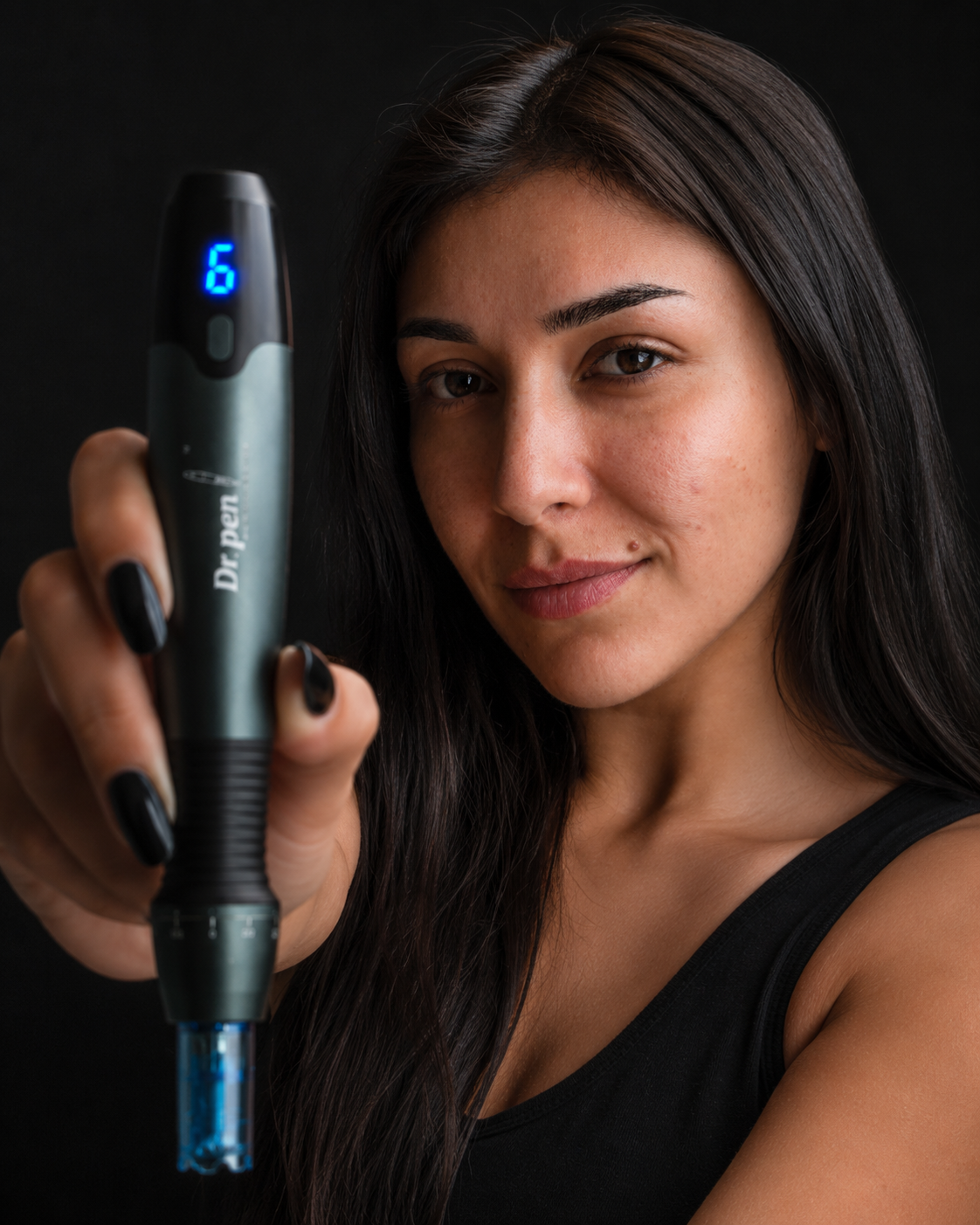
Microneedling effectiveness is not a yes-or-no question. Research suggests that controlled microneedling can improve certain skin and scalp concerns, but the strength of the evidence depends on what you are treating, how the procedure is performed, the device used, the needle depth, the session schedule and aftercare. That is why a claim like “microneedling works” is too broad to be useful. A better question is: for which concerns does the evidence look strongest, what results are realistic and where should you be cautious?
This guide focuses on what published research can reasonably tell you, without treating every before-and-after photo as proof. If you want a broader primer before diving into the evidence, Dr. Pen Store has a separate guide on how microneedling works.
What microneedling effectiveness really means in research
In research, results are usually judged with clinical photos, scar grading scales, wrinkle scales, skin texture assessments, patient satisfaction scores or hair-count measurements. These are useful, but they are not all equally precise. A blinded evaluator looking at standardized photos gives stronger evidence than a patient simply saying their skin “looks better.”
The basic mechanism is collagen induction. Fine needles create controlled micro-injuries in the skin, which can trigger wound-healing pathways involved in collagen and elastin remodeling. The U.S. Food and Drug Administration notes that microneedling devices also carry risks, including infection, skin irritation and pigment changes, depending on the device and how it is used. Its consumer guidance on microneedling device benefits, risks and safety is worth reading if you are comparing treatment options.
In that sense, microneedling effectiveness is an interaction between biology and technique. The same procedure can produce different outcomes depending on skin condition, treatment depth, cartridge quality, hygiene and whether the person follows proper aftercare.
Where the evidence is strongest: acne scars and texture
The most consistent research signal is for atrophic acne scars, especially depressed scars such as rolling and some boxcar scars. These scars involve a loss or distortion of dermal collagen, so a treatment aimed at remodeling collagen has a plausible target.
For acne scarring, microneedling effectiveness is generally supported by clinical reviews, although results are usually gradual and often require multiple sessions. A practical review in the Journal of Clinical and Aesthetic Dermatology describes microneedling as a commonly used option for acne scars, with a relatively favorable safety profile when performed appropriately.
This does not mean every acne scar responds the same way. Ice pick scars can be more resistant. Raised keloid scars are a different problem entirely and should be assessed by a clinician. Skin tone also matters, since post-inflammatory hyperpigmentation risk is higher for some patients if the skin is overtreated or exposed to sun too soon after treatment.
If acne scars are your main concern, you may also find Dr. Pen Store’s focused guide on microneedling for acne scars useful, since it goes deeper into scar types and expectations.
Wrinkles, photoaging and stretch marks: promising but variable
Fine lines, mild wrinkles, enlarged-looking pores and uneven texture are common reasons people look into microneedling. The research here is encouraging, but more variable than the evidence for acne scars. The outcome is often described as smoother texture, better firmness or improved skin quality rather than a dramatic lift.
For photoaging, microneedling effectiveness appears most plausible when the concern is related to dermal collagen quality, such as fine lines or crepey texture. Deep folds caused by facial volume loss or repeated muscle movement are less likely to respond dramatically to microneedling alone.
Stretch marks, also called striae, are another area of interest because they involve structural changes in the dermis. Some studies and reviews report improvement in appearance, but stretch mark age, color, depth and body location can all affect results. Older white stretch marks often respond more slowly than newer red or purple marks.
A practical evidence map
| Concern | What research can reasonably support | What to keep in mind |
|---|---|---|
| Atrophic acne scars | Often one of the best-supported uses | Scar type and treatment depth affect response |
| Fine lines and texture | May improve smoothness and skin quality | Deep wrinkles usually need other approaches |
| Stretch marks | May soften appearance over multiple sessions | Results are variable and gradual |
| Hair thinning | Evidence is strongest when paired with proven therapies | Scalp diagnosis matters before treatment |
| Pigmentation concerns | May help texture-linked discoloration in some cases | Overtreatment can worsen pigmentation risk |

Hair and scalp studies deserve a separate lens
Hair growth research is different from skin texture research because the outcome is not just collagen remodeling. Hair studies usually look at follicle stimulation, blood flow, growth factor signaling and whether microneedling improves the response to topical treatments.
In hair research, microneedling effectiveness looks most convincing when microneedling is used alongside evidence-based hair therapies rather than as a stand-alone cure. A randomized study published in 2013 by Dhurat and colleagues found better outcomes when weekly microneedling was combined with minoxidil compared with minoxidil alone in men with androgenetic alopecia.
That finding is promising, but it should not be stretched into a universal claim. Hair loss can come from genetics, hormones, thyroid disease, nutritional deficiency, traction, inflammation or medication effects. If shedding is sudden, patchy or accompanied by scalp pain, get medical advice before starting any device-based routine.
For a dedicated overview of scalp use, see Dr. Pen Store’s guide to the effect of microneedling on hair.
Why results vary from person to person
Research trials try to standardize treatment, but real life is messier. People use different devices, different cartridge types, different pressure levels and different aftercare. They also start with different skin thickness, scar depth, inflammation levels and healing capacity.
Because of those variables, microneedling effectiveness should be judged as a range of likely outcomes, not a guaranteed endpoint. Two people can use the same device family and still see different timelines because collagen remodeling is biological, not mechanical.
Common variables that influence results include:
- Treatment goal: Acne scars, fine lines, stretch marks and scalp concerns do not respond on the same timeline.
- Needle depth and technique: More aggressive treatment is not automatically better and can increase complications.
- Cartridge quality and compatibility: Bent, dull, reused or incompatible needles can reduce precision and raise safety risks.
- Session spacing: Skin needs time to remodel between sessions, especially after deeper treatments.
- Aftercare: Sun exposure, harsh actives and poor hygiene can undermine results.
A realistic plan starts with the concern, then matches the device, cartridge and schedule to that goal. It should never start with the deepest setting simply because deeper sounds stronger.
Device, needle count and cartridge compatibility matter
The research tells us that controlled injury can stimulate remodeling, but your product choices determine how controlled that injury actually is. A genuine pen used with the wrong cartridge, a reused cartridge or an incompatible cartridge is not the same as a properly matched setup.
In real-world use, microneedling effectiveness depends as much on consistency and hygiene as it does on the theory behind collagen induction. Always use a fresh cartridge for each session, follow your device instructions and avoid treating irritated, infected or sunburned skin.
Choosing the right replacement cartridge
Needle count is not a universal “better or worse” scale. A 36-pin cartridge can be useful for broader coverage and certain texture or scarring concerns, but the right choice depends on the device model and treatment area.
If you already use the A6S Ultima, the 10 x 36 Pin Replacement Cartridges for A6S Ultima are made for that model and provide a 10-pack of compatible 36-needle cartridges. They use stainless steel needles and should be replaced every session, not reused.
For A20 users, the 36 Pin Replacement Cartridges for Dr. Pen A20 Advanced Microneedling Pen (10 Pack) are designed for the Dr. Pen A20. These cartridges feature a patented anti-backflow membrane and are positioned for concerns such as skin firming, scarring, stretch marks on the body and hair growth support.
Safety and the limits of research
Published studies are helpful, but they do not remove the need for safety judgment. Many trials are performed in controlled settings by trained providers. At-home use introduces extra variables, especially around sanitation, pressure, depth selection and knowing when not to treat.
Safety also shapes microneedling effectiveness because irritated or infected skin cannot remodel predictably. Avoid microneedling over active acne lesions, open wounds, rashes, cold sores, suspicious moles or areas with active infection. People with a history of keloids, poor wound healing, immune suppression or certain skin conditions should speak with a qualified professional first.
Aftercare matters too. For most users, that means keeping the treated area clean, avoiding makeup immediately after treatment, pausing strong exfoliants and retinoids as directed and using sun protection. If you experience worsening pain, spreading redness, pus, fever, blistering or unusual discoloration, stop and seek medical advice.
Research can help set expectations, but it cannot personalize risk for every skin condition or every medication. That is where professional assessment still matters.
How to evaluate your own results without fooling yourself
Before-and-after photos are useful only if they are consistent. Different lighting, angles, facial expressions or camera distance can make skin look better or worse than it is. If you want to track progress, take photos in the same place, with the same lighting and no filter.
To judge microneedling effectiveness for yourself, compare changes over months rather than days. Short-term redness or swelling can temporarily blur scars and pores, giving a false sense of immediate improvement. True collagen remodeling is slower.
| Tracking factor | Better method | Why it matters |
|---|---|---|
| Photos | Same lighting, angle and distance each month | Reduces misleading visual changes |
| Skin texture | Track roughness, scars and pore appearance separately | Different concerns improve at different speeds |
| Side effects | Record redness duration, irritation and pigmentation changes | Helps identify overtreatment early |
| Routine | Note cartridge type, treatment area and aftercare | Makes patterns easier to interpret |
| Timeline | Review progress after several sessions | Remodeling is gradual, not instant |
If nothing changes after a reasonable course, do not simply increase intensity. Reassess the concern. You may need a different cartridge, different schedule, professional treatment or a different modality altogether.
Frequently Asked Questions
How long does it take to see results from microneedling? Many people notice temporary brightness or smoothness within days, but meaningful texture and scar changes usually take several weeks to months because collagen remodeling is gradual.
Is microneedling effectiveness better for acne scars or wrinkles? Research is generally strongest for atrophic acne scars. Fine lines and texture may improve too, but deeper wrinkles often need additional treatments.
Can microneedling help with hair growth? It may support hair growth when used as part of a broader plan, especially alongside therapies such as minoxidil in appropriate candidates. A medical diagnosis is important because not all hair loss has the same cause.
Are 36-pin cartridges always the best option? No. Needle count should match the device, treatment area and goal. Compatibility and single-use hygiene matter more than assuming a higher or lower pin count is automatically better.
Can I reuse a microneedling cartridge if I disinfect it? No. Cartridges should be single use. Reusing them can introduce contamination and dull or damage the needles, increasing the risk of irritation, infection and uneven treatment.
The evidence-based way to choose your next step
Microneedling can be a useful tool, but research supports a measured approach: match the treatment to the concern, use genuine compatible cartridges, follow hygiene rules and give the skin time to remodel. The best results usually come from realistic expectations and careful technique, not from aggressive settings or shortcuts.
If you are comparing devices or replacing cartridges, start with the model you actually own and choose compatible, single-use replacements from a trusted source. That simple step protects both safety and results.