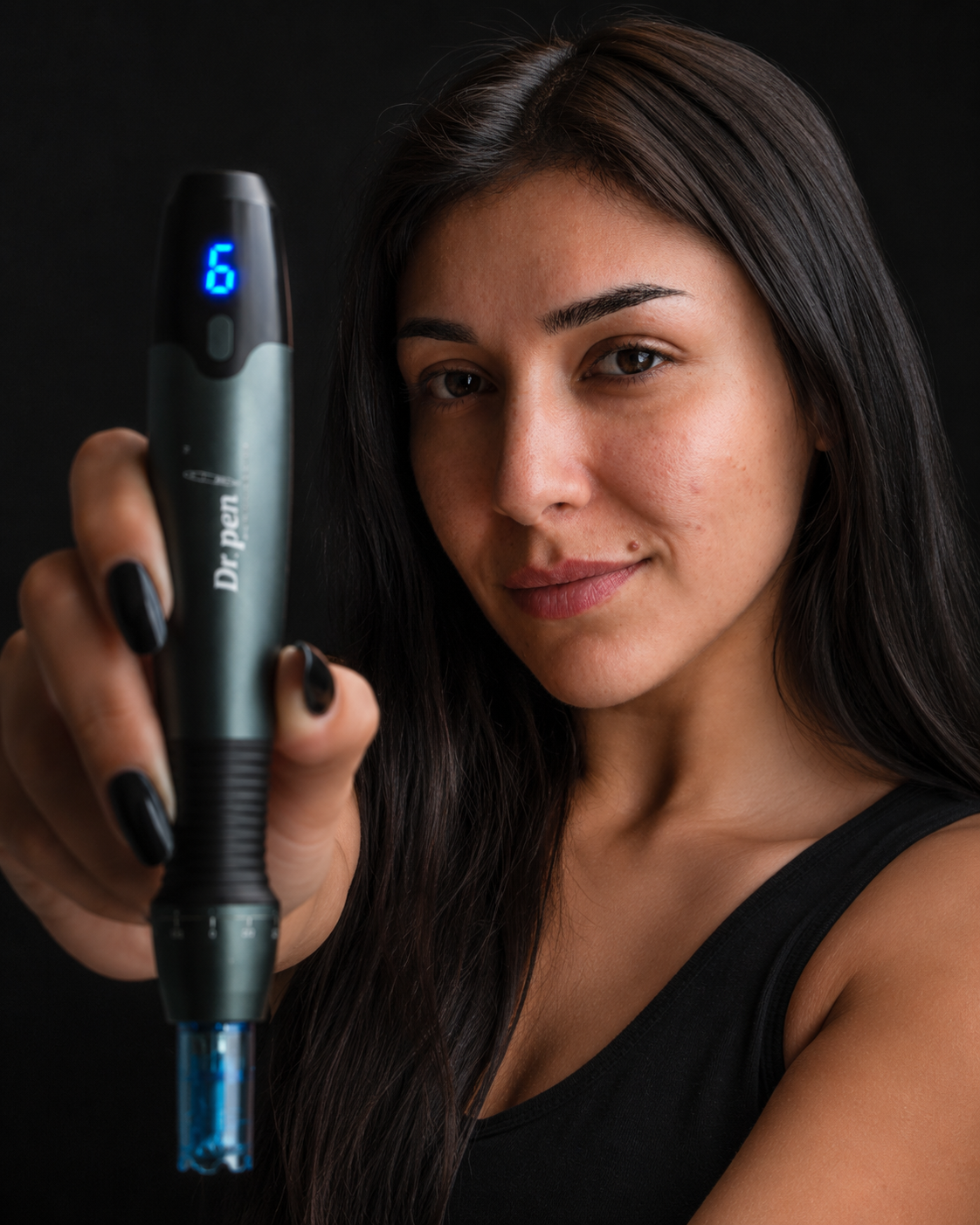


A skin stamping treatment and a microneedling pen are not competing forms of skin care. Both can use needles to create controlled punctures in the skin. The practical difference is how those needles move: a manual stamp is pressed and lifted by hand, while a powered pen drives a cartridge’s needles in and out. Some pen treatments also use a stamping motion, which makes the terminology confusing.
For someone comparing devices, the useful questions are about coverage, operator control, cartridge compatibility and safety, not simply which tool “makes more collagen.” This guide compares manual needle stamps with motorized microneedling pens and explains what to check before choosing a device or professional treatment. Neither device type makes invasive treatment automatically suitable for home use.
How a skin stamping treatment differs from a pen
A manual derma stamp has a group of needles on a head that the operator presses against the skin, then lifts away before repositioning. Depending on the product, its needle length may be fixed or adjustable.
A microneedling pen uses a motor to move the needles within a cartridge. The operator still controls placement, movement and pressure. Motorized needle movement does not eliminate technique-related risks or guarantee an even treatment.
| Comparison point | Manual needle stamp | Motorized microneedling pen |
|---|---|---|
| Needle movement | Created by hand pressure | Created by a powered mechanism |
| Coverage | Requires repeated placement and lifting | Supports repeated needle movement as the operator treats an area |
| Operator demands | Placement, pressure and overlap require attention | Placement, pressure, movement and settings require attention |
| Needle replacement | Depends on the stamp’s design and instructions | Requires the correct model-compatible cartridge |
| Power requirements | No motor or charging system | Depends on the device’s power arrangement |
| Safety considerations | Needle sterility, skin suitability and technique | The same considerations, plus device and cartridge condition |
The important distinction is manual versus powered needle movement, not “stamping versus microneedling.” A manual needle stamp is itself a microneedling tool. Our guide to derma stamping explains that terminology in more detail.
Also check what a product actually contains. A needle stamp, a hollow-needle infusion device and a non-needle cosmetic applicator should not be treated as interchangeable simply because their names sound similar.
Which option fits the treatment area?
Localized concerns and placement control
For a small, clearly defined area, a skin stamping treatment may appeal because each placement is deliberate. The operator can lift the head completely before moving to another location.
That does not mean a stamp is automatically more precise in clinical terms. Uneven pressure or repeated placement over the same spot can still create inconsistent injury. A small head also does not establish that a device is appropriate for delicate areas, individual scars or a particular skin condition.
If the goal is to improve a few acne scars, the first decision should be the treatment plan. Different scar shapes may need different approaches, and not every depressed scar responds equally to microneedling.
Broader coverage and powered operation
A pen’s repeated powered needle movement can make it more practical for a trained operator working across a broader treatment area. However, the operator must still manage contours, contact and coverage.
It is reasonable to compare handling and cartridge availability when choosing a pen, but avoid assuming that a higher speed or larger needle count produces better results. Those specifications describe parts of the device, not the quality of the finished treatment.
For either format, the treatment area and clinical goal should determine whether the tool is suitable. The tool should not determine what gets treated.
Will one produce better results?
A skin stamping treatment is not inherently more effective than a pen treatment, and a motor does not independently create a better healing response. Outcomes depend on the concern being treated, the treatment parameters, practitioner judgment and the skin’s response.
Microneedling can stimulate a wound-healing response that supports collagen remodeling. That provides a rationale for treating certain textural concerns, but it does not prove that every stamp or pen delivers equivalent results.
Evidence about a professionally administered procedure also should not be transferred automatically to an inexpensive consumer device. Device design, treatment setting and the people included in a study matter. Our review of microneedling effectiveness explains where research is more established and where expectations need restraint.
Temporary swelling or redness is not proof of collagen improvement. Meaningful changes in texture develop over time, and neither format can promise complete scar removal, permanently invisible pores or a particular result after one session.
Safety matters more than manual versus motorized
Neither format removes the risks of needling
A skin stamping treatment can cause bleeding, irritation, infection or pigment changes, just as a pen treatment can. A manually operated tool is not necessarily gentler. The injury depends on the needles, their penetration and how the device is used.
Skin suitability matters too. Active infection, inflamed acne, open wounds or an eczema flare can make treatment inappropriate. A history of abnormal scarring, impaired healing, bleeding problems or medicines that affect healing should be discussed with a qualified clinician. Do not stop prescribed medication to accommodate a cosmetic procedure without medical advice.
People concerned about post-inflammatory hyperpigmentation should seek a practitioner experienced with their skin tone. Device choice alone does not remove that risk.
Understand the FDA distinction
The FDA’s guidance on microneedling devices explains the risks, intended uses and limits of these devices. The agency states that it has not authorized microneedling medical devices for over-the-counter sale.
That distinction matters when shopping online: availability for purchase does not establish that a penetrating device is suitable for unsupervised home treatment. FDA clearance is also specific to a device and its labeled use, rather than an endorsement of every product sold under the same brand.
For treatment intended to address scars or wrinkles through skin penetration, consult a licensed healthcare professional about suitability and the appropriate setting. Follow the exact device labeling rather than a generic social-media routine.

What to check before buying a stamp or pen
Confirm the exact model and consumables
With a manual stamp, establish whether the entire device is single-use or whether it has a replaceable needle component. Do not assume a reusable handle makes the needle head reusable.
With a pen, identify the full model name before purchasing cartridges. Similar-looking cartridges are not proof of compatibility, and a cartridge that appears to attach is not necessarily an approved match. Check the manufacturer’s model-specific compatibility information.
For either format, confirm the needle component’s sterility labeling, expiry information where supplied and packaging condition. A damaged or opened sterile package should not be treated as ready for use. Cleaning a used needle component does not make it equivalent to a new sterile one.
Verify authenticity and intended use
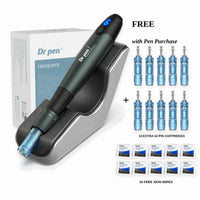
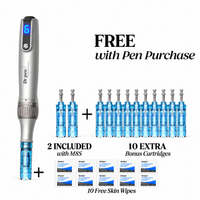
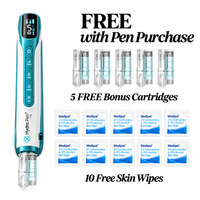
If you are comparing a skin stamping treatment with owning a Dr. Pen device, evaluate more than the initial purchase price. Manufacturer-verifiable authenticity, access to compatible replacement cartridges and usable instructions all affect whether a purchase makes sense.
Dr. Pen Store lists the A20 as FDA-cleared. Review the exact model’s documentation, intended use and user requirements before purchasing, rather than applying that status to the entire Dr. Pen range.
When comparing models such as the A20, M8S or A11, check each product’s actual specifications and cartridge requirements. Do not assume that cartridges, accessories or operating instructions transfer between models.
A useful purchase check is:
- Identity: Can you verify the device and seller through the manufacturer’s stated process?
- Compatibility: Are the correct replacement needle components clearly identified?
- Instructions: Does the labeling explain intended use, contraindications and maintenance?
- Support: Can you obtain help with authenticity, replacement parts or a device fault?
Compare the full cost, not just the handle
A manual stamp may look simpler to own because it has no powered mechanism. Its ongoing cost still depends on whether you replace the entire stamp or a disposable needle head. A pen adds another consideration: continued access to the correct cartridges.
For a skin stamping treatment performed in a clinic, the fee covers more than contact with a tool. Assessment, practitioner time, infection-control measures and follow-up arrangements are part of the service. A device purchase does not include those clinical functions.
Before comparing prices, establish what each option actually includes. Check consumables, maintenance requirements, warranty terms and the cost of professional assessment where needed. No universal price comparison is reliable without knowing the device, treatment area and provider.
Downtime is another cost, but it cannot be predicted from “stamp” or “pen” alone. The intensity of treatment and individual healing response matter more than that label.
Frequently asked questions
Is skin stamping the same as microneedling? A manual stamp with needles that penetrate the skin is a microneedling tool. “Stamping” describes the press-and-lift movement. A powered pen may also be used with a stamping motion, so ask which device and needle system a provider means.
Is a skin stamping treatment safer than a microneedling pen? Not automatically. Manual control does not eliminate infection, excessive injury or pigment-change risks. Skin assessment, sterile single-use needle components, appropriate technique and adherence to labeling matter with either format.
Can a stamp deliver serums into the skin? Do not assume a topical serum is suitable for use with penetrating needles. The FDA says it has not authorized microneedling devices for delivering cosmetics, topical medications, vitamin solutions, drugs or blood products into the skin. A “serum infusion” marketing claim is not evidence of an authorized combination.
Can I reuse a cartridge if I disinfect it? Do not reuse a single-use needle cartridge or share it with another person. Surface disinfection is not a substitute for a new sterile needle component. Follow the product’s instructions for disposal and handle maintenance.
Choose the treatment plan first, then the device
The choice between a skin stamping treatment and a powered pen should follow the treatment goal, skin assessment and appropriate level of supervision. A manual stamp offers deliberate hand-controlled placement; a pen automates needle movement. Neither replaces clinical judgment.
If you are comparing genuine Dr. Pen options, use the model and cartridge information at Dr. Pen Store to narrow your shortlist. Confirm authenticity, compatibility and intended use before purchasing, and ask a qualified clinician whether penetrating microneedling is appropriate for your skin.