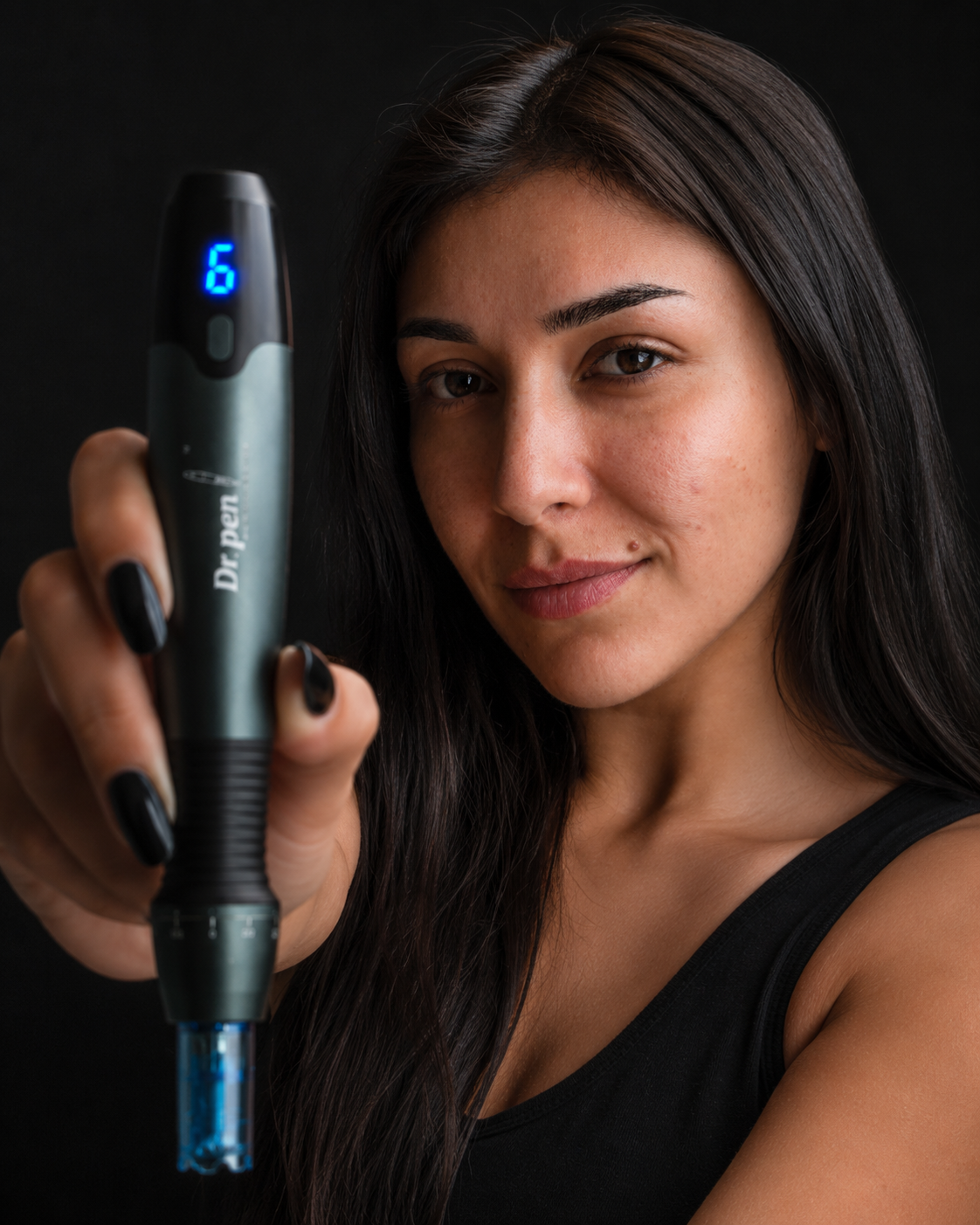
Microneedling stretch marks can be confusing because the result depends on more than the pen itself. The device, cartridge style, needle count, treatment area, skin condition and aftercare all affect how safely and consistently you can work on the look of striae. This guide focuses on the practical buying decisions: which type of Dr. Pen device to consider, how to choose cartridges and when a professional treatment may be the better option.
Stretch marks are a type of dermal scarring, often linked to rapid skin stretching from growth, pregnancy, weight change, muscle gain or hormonal shifts. Newer marks can look red, purple or pink, while older marks often fade to white or silver. The American Academy of Dermatology notes that treatment may make stretch marks less noticeable, but no treatment reliably erases them completely. That expectation matters when choosing a device.
Microneedling Stretch Marks: What Device Choice Changes
A microneedling pen creates controlled micro-injuries in the skin. The goal is to support the skin's natural repair response, including collagen and elastin remodeling, which can gradually improve texture and the look of shallow scarring. For stretch marks, the target is not simply product absorption. You are working on skin texture, firmness and the uneven appearance of scar-like lines.
When you plan microneedling stretch marks on the body, the best device is usually the one that gives you stable control rather than the most aggressive setting. Body areas such as the abdomen, hips, thighs, buttocks and upper arms are larger than the face, so comfort, grip, cartridge availability and consistent needle movement become important.
A good pen should let you adjust depth and speed, fit sterile replacement cartridges securely and feel manageable during a longer session. If you are comparing models such as Dr. Pen A20, M8S, A11, A8S, A10, M9 or Hydra Pen options, start with cartridge compatibility and your intended use area instead of choosing by model name alone.
First, Decide Whether At-Home Microneedling Is Appropriate
Microneedling can be performed in a clinic or with consumer devices, but the risk profile changes when you treat larger body zones or use deeper settings. Stretch marks are often located on areas where people are tempted to be more aggressive. That is where irritation, post-inflammatory hyperpigmentation, infection risk and prolonged redness can become problems.
A careful microneedling stretch marks routine should be conservative, especially for beginners or anyone with darker skin tones prone to discoloration. Do not treat active rashes, sunburn, open wounds, inflamed acne, infections or irritated skin. If you are pregnant, immunocompromised, diabetic, prone to keloids, using blood thinners or have recently used isotretinoin, ask a qualified clinician before needling.
If you need a broader walkthrough of the treatment flow, Dr. Pen Store's guide to how a microneedling procedure works from prep to recovery is a useful companion to this device-focused guide.
How to Match a Device to Stretch Mark Areas
Stretch marks on the abdomen are not the same as narrow marks near the breasts, inner thighs or upper arms. Device selection should reflect the area you can realistically treat with steady pressure and proper hygiene.
For microneedling stretch marks on broad, flatter areas, prioritize a pen that feels comfortable in the hand and accepts cartridges with enough coverage to avoid overworking the skin. For smaller or curved areas, precision matters more than speed. A lighter touch and a smaller working zone can help you maintain even passes without repeatedly crossing the same strip of skin.
| Treatment area | Device priority | Cartridge priority | Caution |
|---|---|---|---|
| Abdomen | Comfortable grip for larger zones | Medium to higher pin count for coverage | Avoid aggressive passes over loose or sensitive skin |
| Hips and thighs | Stable movement across curves | Balanced coverage and control | Work in small sections to avoid uneven pressure |
| Buttocks | Consistent motor and secure cartridge fit | Coverage for larger surface area | Use a mirror or assistance only if hygiene is controlled |
| Upper arms | Easy handling and lower intensity | Smaller to medium cartridge style | Skin may be thinner and more reactive |
| Chest or breast area | Precision and conservative settings | Smaller cartridge style | Professional guidance is strongly recommended |
The main takeaway is simple: bigger body zones often benefit from efficient coverage, while delicate or hard-to-reach areas call for more control.
Cartridge Types: Needle Count, Coverage and Comfort
Cartridges are not interchangeable across every device, and this is one of the most important buying details. Always choose cartridges designed for your exact Dr. Pen or Hydra Pen model. Forcing a cartridge onto the wrong device can affect fit, stability and safe operation.
The best cartridge for microneedling stretch marks depends on the size of the area and your experience level. Lower pin counts can feel more targeted, but they may be slower on larger zones. Higher pin counts cover more surface area and can feel more diffuse, but they still require careful depth selection and steady technique.
| Cartridge style | General use case | How it relates to stretch marks |
|---|---|---|
| Nano tips | Superficial cosmetic infusion and glow routines | Not the right choice for established dermal stretch marks |
| 11 to 16 pin cartridges | Smaller areas and more targeted work | Useful when precision is more important than speed |
| 24 to 36 pin cartridges | Balanced coverage for texture work | Often practical for medium body zones |
| 42 pin cartridges | Broader coverage and a more distributed feel | Useful for larger stretch mark areas when compatible |
For Hydra Pen H6 users, the 42-pin Replacement Cartridges for Hydra Pen H6 (5 pack) are specifically made for that device and are positioned for routines involving firming, scarring, stretch marks and hair growth. They are relevant when you want a compatible higher pin count cartridge for larger or less precise body areas, but they should only be used with the Hydra Pen H6.

Micro-Needles vs Nano Tips for Stretch Marks
Nano tips and microneedle cartridges are sometimes grouped together, but they are not used for the same goal. Nano tips are designed for very superficial cosmetic work and product application. They do not create the same type of dermal stimulation associated with microneedling.
Because microneedling stretch marks involves scar-like changes below the outermost surface, true microneedle cartridges are generally the relevant category. Nano tips may still have a place in a skincare routine for hydration or glow on non-irritated skin, but they should not be chosen as the main cartridge type for visible striae.
If you are unsure where nano needling fits, Dr. Pen Store's comparison of micro-needles vs nano-needles explains the difference in more detail.
Depth and Speed: Stay Conservative
Needle depth is where many users make mistakes. Stretch marks sit in the dermis, so people often assume that deeper is automatically better. In practice, excessive depth can increase trauma without guaranteeing a better cosmetic outcome.
Use the instructions for your specific device and cartridge, and avoid deep settings unless you are trained or supervised by a professional. Areas with thinner skin, recent stretch marks, darker pigmentation or a history of post-inflammatory hyperpigmentation deserve extra caution.
Speed should also be controlled. A very high speed can make it easier to move too quickly and miss how the skin is responding. A very slow, uneven pass can lead to repeated injury in one strip. The safest approach is steady movement, light pressure and a limited treatment area until you understand your skin's response.
How Often Should You Replace Cartridges?
Use a new sterile cartridge for each session. Do not reuse cartridges, share cartridges or store an opened cartridge for later. Microneedling creates microchannels in the skin, so hygiene is part of the treatment, not a minor add-on.
A realistic microneedling stretch marks plan also accounts for the number of cartridges needed. Large areas may require more than one cartridge over time, especially if you treat in sections rather than trying to cover everything in one session. Planning ahead helps you avoid stretching a cartridge beyond its intended use.
Before attaching a cartridge, inspect the sterile packaging. Do not use it if the packaging is opened, damaged or contaminated. After treatment, dispose of the cartridge safely according to local rules for sharps or contaminated personal care items.
Device and Cartridge Buying Checklist
Before buying a pen or cartridge pack, run through the practical details. This is especially useful if you already own a Dr. Pen model and only need replacements.
- Confirm the exact device model before ordering cartridges.
- Choose microneedle cartridges rather than nano tips for established stretch marks.
- Select coverage based on the body area, not just the highest pin count available.
- Buy from a reliable source that sells genuine devices and compatible cartridges.
- Keep enough sealed cartridges on hand so you never reuse one.
Genuine product sourcing matters because counterfeit or poorly matched cartridges can compromise fit and sterility. Dr. Pen Store focuses on genuine Dr. Pen devices, replacement cartridges and support, so the safest starting point is to shop through the official Dr. Pen Store and verify compatibility before use.
What Results Can You Expect?
Microneedling is gradual. Stretch marks may look smoother or less sharply defined over time, but results vary based on age of the marks, skin type, consistency, device technique and aftercare. Newer red or purple stretch marks may respond differently from older white or silver marks.
For a deeper discussion of outcomes, the Dr. Pen Store article on microneedling for stretch marks explains how the treatment works and why improvement is usually measured in subtle changes rather than complete removal.
Expect skin to look pink or mildly irritated after a session. More intense redness, swelling, heat, oozing, unusual pain or worsening discoloration are signs to stop and seek professional advice. Do not rush the process by treating too often. Skin remodeling takes time.
Aftercare Matters as Much as the Cartridge
Aftercare should focus on cleanliness, barrier support and avoiding irritation. Skip exfoliating acids, retinoids, fragranced products, self-tanner and harsh actives until the skin has fully settled. Use bland hydration, sun protection on exposed areas and clean clothing that will not rub the treated skin.
Sun exposure can make discoloration worse, especially after needling. If the treated area may be exposed, protect it carefully. For body areas covered by clothing, avoid tight friction immediately after a session.
Product selection should be simple. Microneedling is not the time to test a new active serum on compromised skin. If you use skincare with your device, follow the device instructions and choose products intended for post-treatment use.
Frequently Asked Questions
What cartridge is best for microneedling stretch marks? The best cartridge depends on your device and treatment area. Medium to higher pin counts can be practical for larger body zones, while smaller pin counts may suit narrow or curved areas. Always choose a sterile cartridge made for your exact model.
Can nano tips treat stretch marks? Nano tips are not the right choice for established stretch marks because they work very superficially. They may support product application or glow-focused routines, but microneedle cartridges are the relevant option for texture-related concerns.
Is a 42-pin cartridge good for stretch marks? A 42-pin cartridge can be useful for broader coverage when it is compatible with your device. For example, Hydra Pen H6 users can consider the compatible 42-pin H6 cartridges, but the right choice still depends on skin sensitivity, treatment area and technique.
Can I reuse a microneedling cartridge on stretch marks? No. Use a new sterile cartridge for every session. Reusing cartridges increases contamination risk and can also mean working with dulled or damaged needles.
Should I treat old white stretch marks at home? Older white stretch marks may be harder to improve and often require patience. At-home microneedling should be conservative. If the marks are deep, widespread or located on sensitive areas, professional guidance is the safer route.
Choosing the Right Setup
The right setup for stretch marks is not simply the strongest pen or the deepest setting. It is a compatible device, a sterile cartridge matched to the area and a routine your skin can tolerate consistently. Choose genuine Dr. Pen devices and cartridges, confirm model compatibility and treat results as gradual improvement rather than instant correction.
If you already own a Hydra Pen H6 and want a cartridge option relevant to body texture, scarring and stretch marks, check the compatible 42-pin H6 replacement cartridges. If you are still choosing a device, start by comparing the area you want to treat, the cartridge types available for each model and how comfortable you feel managing hygiene and aftercare at home.