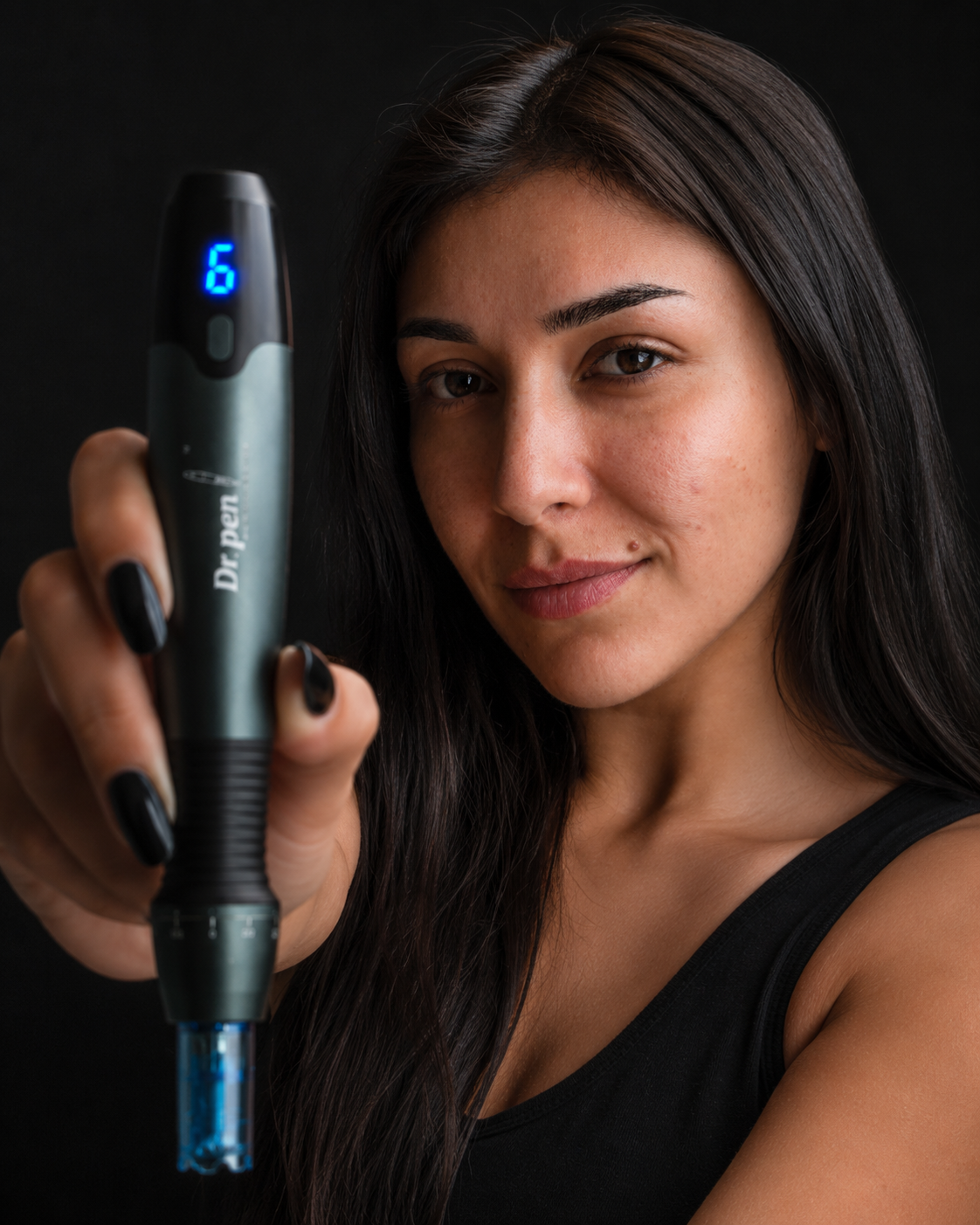
Choosing the right Dr. Pen microneedling pen starts with a practical question: what do you need the device to do, and how often will you realistically use it?
A lower-priced pen can become expensive if cartridges are hard to source. A feature-rich model can be the wrong choice if you only want an occasional at-home texture treatment. For professionals, the decision is even broader because authenticity, repeatable cartridge supply and client safety protocols matter as much as device feel.
This guide gives you a clear framework for choosing a Dr. Pen microneedling pen without getting lost in model names. Use it to compare devices by treatment goal, cartridge compatibility, authenticity, safety and long term value.
Start with your skin goal, not the model name
Most shoppers begin by asking which Dr. Pen is best. A better first question is what you want to improve. Microneedling devices are used for different concerns, but the right setup for a glow-focused routine is not necessarily the right setup for acne scar texture, stretch marks or professional treatments.
Think in terms of treatment intensity, cartridge type and how much control you need. If you are new to microneedling, a straightforward device with easy access to compatible cartridges may serve you better than a more advanced pen you will not use confidently.
| Your main goal | What to prioritize | Buying note |
|---|---|---|
| Fine lines, texture and enlarged pores | Smooth depth adjustment, compatible sterile cartridges and easy handling | Choose a device you can control precisely rather than chasing maximum intensity |
| Acne scars or stretch marks | Stable device performance, correct cartridges and professional guidance when needed | These concerns often require a more cautious, structured approach |
| Serum-focused glow treatments | Nano tips or a Hydra Pen style device, depending on your routine | Nano needling and microneedling are not the same treatment |
| Scalp or hairline use | Ergonomics, hygiene and cartridge compatibility | Check suitability and follow instructions carefully before treating the scalp |
| Clinic or med spa use | Authentic supply, cartridge availability, support and local regulatory requirements | Professional use should be guided by formal protocols and client screening |
The goal is not to buy the most intense device. The goal is to buy the device that matches the result you want, the cartridges you will use and the level of experience you have.
Confirm microneedling is suitable before you buy
Microneedling is not appropriate for every person or every skin condition. The FDA explains that microneedling devices can carry risks, including infection, skin irritation and pigment changes when used incorrectly or on unsuitable skin.
Avoid treating over active infections, irritated skin, open wounds or active breakouts. If you have a history of keloid scarring, diabetes, immune concerns, bleeding disorders, recent cosmetic procedures or prescription skin treatments, speak with a qualified healthcare professional before using any microneedling device.
This matters for buying because the safest pen is still the wrong pen if your skin is not ready for treatment. First confirm that microneedling fits your skin and timing, then compare models.
Choose by cartridge ecosystem first
Cartridge compatibility is one of the most important buying factors, yet it is often overlooked. A Dr. Pen device is not a one-time purchase. Cartridges are single-use treatment supplies that need to be replaced regularly, and compatibility can vary by model.
Do not assume a cartridge made for one Dr. Pen model will fit another unless the product page specifically lists that compatibility. Before you buy, check the exact cartridge platform for the device you are considering and make sure replacements are easy to order from a verified source.
You should also decide whether you need micro-needle cartridges, nano tips or both. Micro-needles are used for actual microneedling. Nano tips are generally associated with more superficial cosmetic treatments and serum-focused routines. If you are comparing those options, Dr. Pen Store has a helpful guide on micro-needles vs nano-needles for Dr. Pen pens.
A smart cartridge check includes three questions: does this cartridge fit the exact model, is it sterile and sealed, and can I reliably buy replacements later? If the answer to any of these is unclear, pause before purchasing.
Understand the main Dr. Pen model groups
Dr. Pen has several model families, including the A20, M8S, A11, A8S, A10, M9, Hydra Pen H3 and Hydra Pen H6. Rather than trying to rank every pen from best to worst, it is more useful to group them by buying priority.
| Model family | Best reason to compare it | Buyer note |
|---|---|---|
| Dr. Pen A20 | You want the FDA-cleared option highlighted by Dr. Pen Store | Verify the exact product listing, included items and compatible A20 cartridges before purchase |
| Dr. Pen M8S and M9 | You are comparing popular Dr. Pen options for frequent or advanced routines | Review current specifications and cartridge compatibility carefully |
| Dr. Pen A11, A8S and A10 | You want an established Dr. Pen model or are replacing an older device | Confirm whether your existing cartridges, if any, are compatible before reordering |
| Hydra Pen H3 and Hydra Pen H6 | You are more focused on hydration-style or serum-delivery treatments | These are a different category from standard microneedling pens, so match them to the right goal |
If you want a broader side-by-side look at current models, use Dr. Pen Store's 2026 buyer's guide to choosing a Dr. Pen device alongside this decision framework.
Compare controls, not marketing claims
Once you have narrowed the model family, compare the controls that affect real-world use. Depth adjustment, speed settings, cartridge seating, grip comfort and power setup all influence how confidently you can perform a treatment.
Depth range deserves special attention. Deeper is not automatically better, and aggressive settings can increase the risk of irritation, prolonged redness, pigmentation issues or avoidable injury. For at-home users, precision and restraint usually matter more than maximum capability.
Speed settings can also affect comfort and workflow. Some users prefer more control for delicate areas, while professionals may care about consistency over repeated treatments. Always check the exact product page for current specifications rather than relying on assumptions from a similar-looking model.
Factor in total cost, not just device price
The pen itself is only part of the investment. Cartridges, skincare, disinfecting supplies and replacement timing all contribute to the real cost of owning a Dr. Pen microneedling pen.
| Cost factor | Why it matters |
|---|---|
| Device price | The upfront purchase should match your experience level and treatment goals |
| Replacement cartridges | Cartridges are recurring supplies and must be compatible with your model |
| Pre-care and aftercare products | Gentle, appropriate skincare supports a safer treatment experience |
| Shipping and support | Reliable fulfillment and knowledgeable support are valuable when buying a device you will use on your skin |
| Replacement or upgrade path | Existing owners should consider whether it is cheaper to maintain, replace or upgrade their current model |
A cheap listing may not be cheap if compatible cartridges are unavailable, authenticity is unclear or support is missing. For a device that punctures the skin, source reliability is part of the value.

Prioritize genuine devices and safe supply
Counterfeit microneedling pens and cartridges are a real concern for shoppers. A device may look similar in photos, but that does not mean the motor, cartridge fit, packaging, needle quality or support channel are reliable.
Buying genuine matters because microneedling depends on clean, consistent contact with the skin. Poorly fitting or questionable cartridges can compromise the experience, and an unverified device may leave you without help if something seems wrong.
Look for clear authenticity practices, manufacturer-verifiable products, model-specific cartridge listings, visible support options and transparent product information. Dr. Pen Store focuses on genuine Dr. Pen devices and compatible replacement cartridges, which is especially important if you are buying in the US and want to avoid marketplace uncertainty.
Match the device to your experience level
If you are a first-time at-home user
Start with suitability, hygiene and ease of use. Choose a model with cartridges you can easily reorder and avoid buying solely because a device appears to have more settings. Your first priority is learning a controlled routine.
Before your first treatment, review a complete process from preparation through aftercare. Dr. Pen Store's guide on how to microneedle at home is a useful next step once you have chosen the right device.
If you already own a Dr. Pen device
Your buying decision may be about replacement, cartridge restocking or upgrading. Start by identifying the exact model you own, then check whether compatible cartridges are still available. Do not buy cartridges based on visual similarity alone.
If your current pen still meets your treatment needs and compatible cartridges are easy to get, restocking may be enough. If your needs have changed, or if you want a verified device from a more reliable source, upgrading may make more sense.
If you are an advanced user or skincare professional
Professionals and experienced users should think beyond a single device. Consider how easily you can maintain cartridge supply, standardize protocols, train staff, store sterile supplies and document client suitability. Also check your state or local rules for microneedling services, since requirements can vary.
For professional environments, authenticity and support are not optional extras. They help protect your workflow and reduce avoidable risk.
If you mainly want serum-focused treatments
If your goal is a superficial glow routine or serum-focused treatment, a Hydra Pen or nano approach may fit better than standard microneedling. The key is to avoid treating all devices as interchangeable. Microneedling, nano needling and Hydra Pen style treatments differ in intensity, purpose and aftercare expectations.
Use this quick buying checklist
Before you choose a Dr. Pen microneedling pen, make sure you can answer these questions clearly:
- What is my main treatment goal?
- Is my skin currently suitable for microneedling?
- Do I need microneedling, nano needling or a Hydra Pen style treatment?
- Which cartridges fit the exact model I am buying?
- Are replacement cartridges easy to source from a verified seller?
- Is the device genuine and manufacturer-verifiable?
- Do I understand the ongoing cost of cartridges and aftercare?
- Have I read the instructions and safety guidance before treatment?
If you cannot answer one of these, keep researching before buying. A few extra minutes spent checking compatibility and authenticity can prevent wasted money and unsafe product choices.
Common wrong choices to avoid
Many buying mistakes happen because shoppers compare devices too narrowly. Price, model name and social media popularity do not tell the whole story.
| Common mistake | Better choice |
|---|---|
| Buying the cheapest listing you can find | Buy from a verified source that sells genuine devices and compatible cartridges |
| Choosing based on maximum depth | Choose based on control, suitability and your actual treatment goal |
| Ignoring cartridge compatibility | Confirm the exact cartridge platform before buying the pen |
| Treating nano needling and microneedling as the same | Match the tip type to the treatment you actually want |
| Skipping aftercare planning | Have gentle skincare and recovery time ready before your first session |
The right Dr. Pen is the one you can use safely, maintain properly and support with the correct cartridges over time.
Frequently Asked Questions
What is the best Dr. Pen microneedling pen? The best Dr. Pen microneedling pen depends on your goal, experience level, cartridge needs and preference for features such as verified FDA clearance. For many buyers, the right choice is the device with the best match between safety, authenticity and compatible cartridge availability.
Is the Dr. Pen A20 the right choice if I want an FDA-cleared pen? Dr. Pen Store identifies the A20 as an FDA-cleared option. If FDA clearance is a top buying priority, start your comparison there, then confirm the current product details, included accessories and compatible cartridges on the listing.
Can I use cartridges from a different Dr. Pen model? Only use cartridges that are specifically listed as compatible with your exact model. Visual similarity is not enough, and forcing the wrong cartridge can create safety and performance issues.
Should beginners choose micro-needles or nano tips? It depends on the treatment goal. Nano tips are generally used for more superficial cosmetic routines, while micro-needles are used for microneedling. Beginners should start conservatively and read the device instructions before treatment.
How many replacement cartridges should I buy? Cartridges are single-use supplies, so plan around your treatment schedule and the areas you intend to treat. It is usually smarter to buy the correct compatible cartridges with your device so you are not stuck waiting before your next session.
Where should I buy a genuine Dr. Pen device in the US? Buy from a source that clearly focuses on genuine Dr. Pen devices, manufacturer-verifiable authenticity, compatible cartridges and support. This helps reduce the risk of counterfeit products and compatibility mistakes.
When you are ready to compare models, explore genuine Dr. Pen devices, replacement cartridges and skincare support at DrPenStore.com. Start with your skin goal, confirm compatibility, choose an authentic device and build a routine you can follow safely.