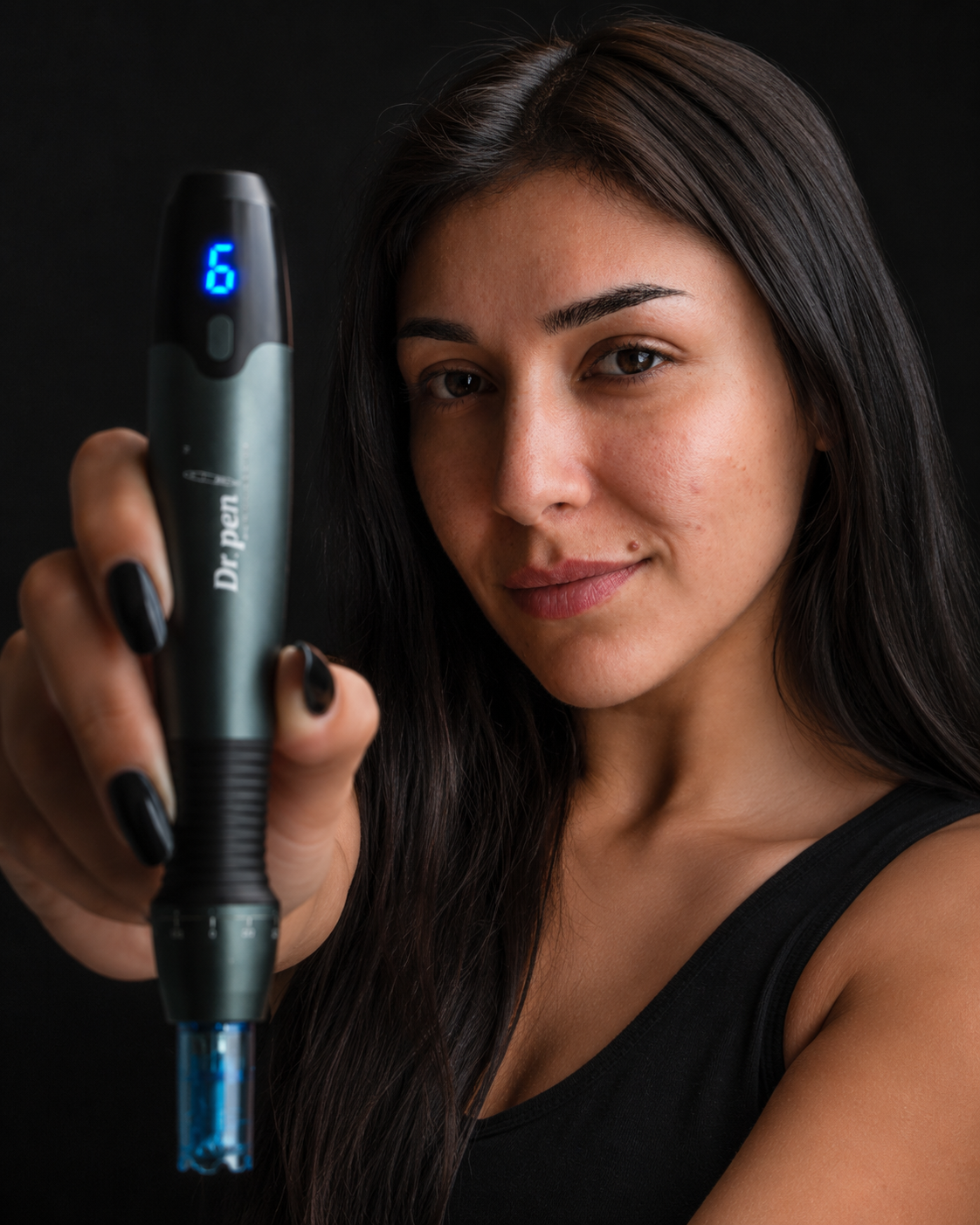



Cosmetic needling may improve fine lines and uneven texture, but mature skin needs more than an anti-aging promise. Dryness, sun damage, easy bruising and medications can change how skin responds to treatment. A setting that someone else tolerates is not necessarily appropriate for you.
The goal should be a modest improvement in skin quality, not a facelift effect or the elimination of every wrinkle. Before choosing a pen or booking an appointment, understand which concerns needling can address, what makes treatment unsuitable and how to protect the skin barrier afterward. Your skin’s condition and medical history matter more than your birthday.
Understand the treatment names first
Cosmetic needling is not a standardized treatment category with one universally accepted needle depth. Clinics and retailers may use the term for different procedures, so the name alone cannot tell you how invasive a treatment is or who should perform it.
Conventional microneedling uses needles to create controlled punctures in skin. Depending on the device and procedure, these injuries can stimulate wound-healing processes associated with collagen remodeling. More penetration does not automatically produce better results, particularly in fragile or heavily sun-damaged skin.
| Treatment label | What it generally describes | What to clarify |
|---|---|---|
| Cosmetic or superficial needling | A variable marketing term for relatively superficial treatment | Whether tips penetrate living skin and what the device instructions permit |
| Medical microneedling | A skin-penetrating procedure intended to affect tissue structure or function | Provider qualifications, authorized indications and individualized settings |
| Nano needling | Usually a treatment using very small tips that may not puncture living skin | Whether the device actually penetrates skin; do not assume equivalent collagen effects |
| RF microneedling | Needles combined with radiofrequency energy | Additional heat-related risks and the provider’s experience with the specific device |
These categories can overlap. Ask for the exact device name, its intended use and the reason it suits your concern. A manufacturer’s depth dial is not a substitute for a clinical assessment, and a more expensive or more aggressive treatment is not necessarily the better choice.
What cosmetic needling can change in mature skin
A successful outcome may mean somewhat smoother texture or softer fine lines. Results depend on the original concern, treatment technique and the skin’s ability to recover. Evidence is not equally strong for every advertised use, as our review of what microneedling research can tell you explains.
Separate these concerns before deciding:
- Fine lines and uneven texture: These may improve gradually, although the degree of change varies.
- Deep folds and volume loss: Needling does not replace lost facial volume or reliably correct pronounced folds.
- Loose skin and jowls: Any improvement in skin quality should not be confused with surgical lifting.
- Brown spots or changing lesions: These need an accurate diagnosis before cosmetic treatment, especially on chronically sun-exposed skin.
Early plumping can reflect swelling rather than new collagen. Likewise, a hydrated appearance after applying skincare does not establish that the underlying skin structure has changed.
For mature skin, realistic photographs and a clearly defined concern are more useful than a broad promise of “rejuvenation.” Decide what improvement would be worthwhile before committing to a course of treatments.
Assess skin health, medications and healing first
Cosmetic needling is not automatically unsuitable after a particular age. However, thin-looking, easily injured or persistently irritated skin deserves professional assessment rather than an assumption that a shallow setting will make treatment safe.
Tell the treating clinician about blood thinners, antiplatelet medicines, corticosteroids, immunosuppressants, isotretinoin and prescription skincare. Include nonprescription products and supplements. Do not stop prescribed medication to make a cosmetic appointment possible. The clinician who manages that medicine should help determine whether treatment is appropriate.
Diabetes, impaired healing, immune suppression, previous keloids and recurrent cold sores can also affect planning. A history of pigment changes after inflammation matters, regardless of age. Darker skin tones can be treated in appropriate settings, but post-inflammatory hyperpigmentation remains a possible complication.
Postpone treatment over active infection, open wounds, sunburn, inflamed eczema or a rosacea flare. A suspicious, bleeding or changing spot should be examined rather than needled. Our guide to when to postpone a microneedling treatment covers additional reasons to delay.
Include comfort and expectations in the decision
Thin skin around the eyes, prominent surface vessels and areas with reduced sensation need particular caution. Do not improvise treatment on eyelids or assume facial settings are suitable for the neck, chest or hands.
Emotional readiness matters too. If appearance worries are disrupting sleep, relationships or daily activities, pause elective treatment and discuss that distress with a qualified clinician. For readers in New York, psychiatric and psychological care offers a setting to discuss persistent concerns. Cosmetic procedures should not be expected to resolve anxiety or compulsive appearance checking.
Professional assessment and infection control are essential
The main safety question with cosmetic needling is not simply whether a pen is genuine. It is whether the procedure, device and operator are appropriate for your skin.
The FDA’s guidance on microneedling devices explains potential benefits, risks and regulatory distinctions. The agency states that it has not authorized microneedling medical devices for over-the-counter sale. Being available online does not establish that a skin-penetrating device is suitable for self-treatment.
A professional should assess your skin, review medications and explain the intended treatment area, recovery and alternatives. Ask who will perform the procedure and how complications are handled.
Infection control is nonnegotiable. A cartridge must be compatible with the exact pen model, supplied sterile where required and used according to its labeling. Never share or reuse a single-use cartridge, including for a later session on yourself. Wiping or soaking a used cartridge does not restore its original sterility.
The reusable handpiece also needs manufacturer-specified cleaning and protective measures. A fresh cartridge does not make a contaminated handpiece safe. Genuine equipment verification and infection prevention are separate checks, and both matter.
Keep aftercare simple and product-specific
After cosmetic needling, mature skin may feel tight, dry, warm or unusually sensitive. Follow the treating professional’s written instructions rather than combining advice from unrelated treatment protocols.
Do not use a pen to introduce ordinary cosmetic serums, vitamin mixtures or medications into freshly punctured skin. A product tolerated on intact skin is not necessarily appropriate when the barrier has been disrupted. The FDA has not cleared microneedling devices for use with another product such as creams, cosmetics or topical medications.
Retinoids, exfoliating acids, scrubs, fragranced products and strong vitamin C formulas may irritate recovering skin. Ask when to pause and restart each product, particularly prescription treatments. There is no single restart day suitable for every procedure and every patient.
The Medik8 Post Treatment Kit is intended to support sensitive or compromised skin after professional treatment. If you are considering it, have your provider check the individual products and advise when to introduce them. A post-treatment label does not mean a product is sterile, suitable for application into needle channels or appropriate immediately after every procedure.
Use only the cleansing, moisturizing and sun-protection products your clinician recommends at the appropriate stage of recovery. Until skin has recovered, avoid picking flakes, unnecessary friction and activities your provider has restricted, such as swimming or intense heat exposure.

Allow recovery before judging results or repeating treatment
Recovery depends on treatment intensity, location and baseline skin health. Temporary redness, tenderness, mild swelling and dryness can occur. Some visible effects settle within several days, but appearance alone does not prove that the barrier has fully recovered.
With cosmetic needling, any collagen-related change develops gradually over weeks to months. The result should be assessed after initial swelling has resolved, not from a same-day photograph. Take comparison pictures in similar lighting, with the same facial expression and without filters.
Professional treatment courses often space sessions several weeks apart, commonly around four to six weeks, but that is not a universal schedule. Fragile skin or a more intensive procedure may need longer. Persistent redness, sensitivity or peeling is a reason to contact the provider, not to proceed because the next appointment is already booked.
Do not increase depth, pressure or treatment frequency because early improvement seems small. Repeated injury before recovery can prolong inflammation and increase the chance of complications. A responsible plan includes a point at which you reassess whether further treatment is worthwhile rather than automatically continuing a package.
Consider alternatives without stacking treatments
Needling is only one option. Daily sun protection and an appropriate moisturizer remain useful foundations, while prescription skincare or other professional treatments may better address particular concerns. Deep folds, pigment disorders and pronounced laxity require different discussions rather than simply stronger needling.
For people exploring a non-needle device, Sculpta by Déesse PRO combines EMS, radiofrequency and red LED light in a dual-ended face and body device. It is a different treatment category from microneedling and should be evaluated on its own instructions, contraindications and expected outcomes.
Non-needle does not mean suitable for every person or for freshly treated skin. Do not layer heat, electrical stimulation or additional procedures onto a recovering area without professional clearance. More treatments in the same week are not necessarily more effective, and irritation can make it harder to identify which product or procedure caused a problem.
Recognize problems that need medical attention
Cosmetic needling can cause bruising, prolonged irritation, pigment changes, infection or scarring. Mature skin that bruises easily or heals slowly may have less tolerance for an overly aggressive procedure. Radiofrequency microneedling adds heat-related risks and should not be treated as interchangeable with conventional needling.
Contact the treating clinician promptly if pain, redness or swelling is worsening rather than settling, especially if improvement is followed by deterioration. Pus, spreading warmth, fever, blisters or cold-sore-like lesions also require medical advice. Do not cover these signs with makeup or attempt to treat a suspected infection using leftover medication.
Severe pain, rapidly spreading swelling, eye symptoms or a significant burn warrant urgent assessment. Know how to reach the provider before treatment and keep the device and product details available if another clinician needs to assess a reaction.
Frequently asked questions
Is 65 or 75 too old for microneedling? Age alone does not decide suitability. Skin integrity, medical conditions, medication use and healing history are more useful considerations. A consultation may identify a safer alternative even when age itself is not a barrier.
Can cosmetic needling make mature skin look worse? Temporary redness and dryness can make lines look more noticeable during recovery. Persistent worsening is different: excessive injury, infection, scarring or pigment changes can leave lasting effects. Seek review rather than trying to correct the problem with another session.
Should thinner skin be treated more deeply to stimulate collagen? No. Thin-looking skin is not a reason to increase penetration. Treatment intensity should reflect the anatomy, device instructions and clinical assessment. There is no universally safe depth based only on age or wrinkle severity.
Can I use retinol immediately afterward? Do not restart it automatically. Retinol and prescription retinoids can irritate recovering skin. Your provider should specify when to resume your particular product based on the procedure and recovery.
Does a genuine cartridge make home treatment safe? Authenticity is only one requirement. Correct compatibility, sterility, single-use handling, appropriate treatment selection and operator competence also matter. Genuine equipment cannot remove the risks of an unsuitable procedure.
Choose an appropriate plan before choosing equipment
Start with a qualified skin assessment and a specific goal, such as improving fine texture rather than lifting jowls. If a device-based treatment is appropriate, confirm the exact model, intended user and compatible single-use cartridges before ordering.
When contacting Dr. Pen Store, request model-specific product information and compatibility guidance. Use clinical advice to decide whether treatment suits your skin, then use the manufacturer’s instructions to guide equipment selection and care.