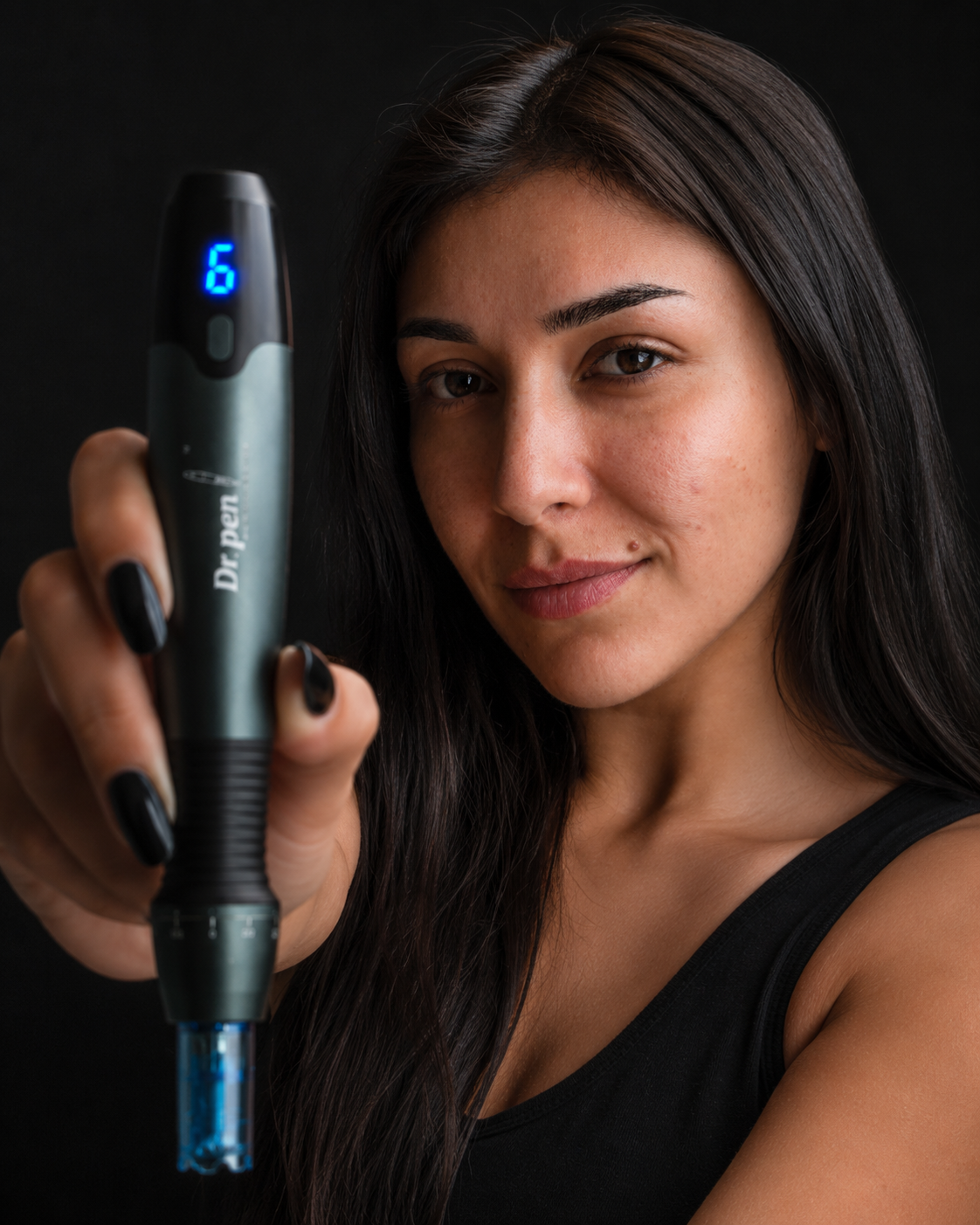
Yes, microneedling can soften fine lines, especially early lines caused by collagen loss, sun exposure and skin dehydration. It works best when the goal is gradual texture improvement rather than an instant “erase wrinkles” result.
For shoppers researching microneedling for fine lines, the practical question is not only whether it works. It is whether your lines are the type likely to respond, how to use a device safely, what results to expect and when a professional treatment is the better choice.
This guide focuses on realistic outcomes, safe planning and the product details that matter when choosing a microneedling pen or replacement cartridge.
How microneedling helps fine lines look softer
Microneedling uses tiny needles to create controlled microchannels in the skin. In response, the skin begins a repair process that supports collagen and elastin production. Collagen gives skin structure and firmness, while elastin helps it bounce back after facial movement.
As collagen naturally declines with age, fine lines often become more visible around the eyes, mouth, forehead and cheeks. Sun exposure speeds up that process by breaking down collagen fibers, which is why fine lines often appear earlier on areas that receive the most UV exposure.
A StatPearls overview of microneedling describes the treatment as a collagen induction technique used for concerns such as scars, wrinkles and skin texture. In simple terms, microneedling does not “fill” a line the way injectable treatments can. It encourages the skin to remodel over time, which can make fine lines appear smoother and less etched.
If you are new to the treatment itself, Dr. Pen Store also has a helpful primer on what microneedling is and how it works.
Which fine lines respond best?
Microneedling tends to be most useful for shallow texture lines and early signs of aging. Deeper folds and expression lines can improve in overall skin quality, but they usually need a broader plan.
| Type of line | Common cause | Likely microneedling response | Practical takeaway |
|---|---|---|---|
| Fine crepey lines | Collagen loss, dryness, sun exposure | Often a good candidate | Best paired with barrier care and daily sunscreen |
| Early forehead lines | Repeated expression plus collagen decline | May soften texture | Dynamic movement lines may still show when you raise your brows |
| Smile lines around the mouth | Expression, volume loss, skin thinning | Can improve surrounding texture | Deep folds may need professional cosmetic options |
| Under eye fine lines | Thin skin, sun exposure, dehydration | Requires extra caution | Seek professional guidance for this delicate area |
| Deep static wrinkles | Long-term collagen loss, skin laxity, volume changes | Usually modest improvement | Microneedling may support skin quality but will not replace lifts, fillers or neuromodulators |
The biggest mistake is expecting microneedling to behave like a wrinkle eraser. It is better viewed as a skin quality treatment. When it works well, skin often looks smoother, more even and more resilient, which makes fine lines less noticeable.
What results can you realistically expect?
Microneedling results come in stages. Right after a session, the skin may look flushed and feel tight. Some people notice a temporary plump look within a few days, but that early effect is not the same as collagen remodeling.
The more meaningful changes develop gradually over weeks as the skin repairs itself. A consistent plan may help improve:
- Overall texture and smoothness
- The look of shallow fine lines
- Dullness and uneven tone
- Mild roughness from sun exposure
- The appearance of enlarged pores in some users
Results vary because skin age, sun damage, genetics, lifestyle and technique all matter. If you have significant sun damage, smoking history or deep static wrinkles, microneedling may still support healthier-looking skin but will usually produce more subtle line softening.
Who should be cautious or avoid microneedling?
Microneedling is not right for every skin condition. The FDA’s microneedling device safety guidance notes that microneedling devices can carry risks such as infection, skin damage, bleeding, irritation and allergic reactions when not used appropriately.
You should avoid microneedling over active acne, open wounds, rashes, sunburn, cold sores or irritated skin. People with a history of keloid scarring, uncontrolled diabetes, blood clotting concerns, active skin infections or immune suppression should speak with a qualified healthcare professional first. If you are pregnant, nursing, taking blood thinners or using prescription actives such as isotretinoin, get medical guidance before treatment.
Skin tone matters too. Microneedling can be used across many skin types, but darker skin tones may be more prone to post-inflammatory hyperpigmentation if the skin is overtreated or not protected from the sun afterward. Dr. Pen Store’s guide on who is suitable for microneedling covers this topic in more detail.
At-home microneedling vs professional treatment
At-home microneedling and professional microneedling are not interchangeable. Professional treatments are performed by trained providers and may use protocols that are not appropriate for home use. At-home use should stay within the instructions for your specific device, cartridge and local regulations.
For fine lines, at-home microneedling is generally best approached as a conservative maintenance routine. The goal is to support skin texture without causing unnecessary inflammation. More aggressive treatment does not mean better results. It can increase the risk of irritation, barrier damage, prolonged redness and pigmentation issues.
Professional treatment may be a better fit if you have deeper wrinkles, significant acne scarring, delicate under eye concerns, melasma-prone skin or a medical history that makes at-home treatment risky.

Choosing a microneedling pen and cartridge for fine lines
The device and cartridge you choose affect comfort, precision and safety. Fine line treatments need control, consistency and sterile single-use cartridges. A pen that feels unstable or uses questionable cartridges is not worth the risk.
When comparing options, look for these basics:
- A genuine device from a trusted source
- Sterile, compatible cartridges for your exact model
- Clear instructions for use, cleaning and storage
- Adjustable settings that can be used according to the device manual
- Responsive support if you are unsure about compatibility or setup
Cartridge compatibility is especially important. Different Dr. Pen models use different cartridge types, and forcing an incompatible cartridge can damage the device or create an unsafe treatment experience. Replacement cartridges should also be treated as single-use items. Reusing cartridges can dull the needles and increase contamination risk.
If you are buying or upgrading, choose genuine Dr. Pen devices and compatible cartridges from a source that prioritizes authenticity and support. This is especially relevant online, where counterfeit microneedling devices and cartridges can look convincing in product photos.
A practical routine for softening fine lines
A good fine line routine is conservative, consistent and built around skin recovery. The exact process should always follow the instructions for your device and cartridge, but the overall framework is simple.
Start with calm skin. Do not microneedle on the same day you use strong exfoliating acids, retinoids or harsh scrubs. Your skin barrier should feel normal, not stinging, peeling or inflamed.
Cleanliness matters. Wash your hands, cleanse your skin thoroughly and use a fresh sterile cartridge. Avoid touching the needle tips. If a cartridge is dropped, damaged or no longer sealed, do not use it.
During the session, avoid chasing redness as proof that the treatment is “working.” Mild redness can happen, but intense pain, pinpoint bleeding from aggressive pressure or lingering irritation is a sign to stop and reassess. More pressure is not a shortcut to better collagen.
After microneedling, keep skincare bland and supportive. Many users focus on hydration and barrier repair for the first day or two. Avoid makeup immediately after treatment unless your provider or product instructions say otherwise. Do not use exfoliating acids, retinoids, fragranced products or strong vitamin C on freshly needled skin unless specifically directed by a qualified professional.
Sun protection is not optional. The American Academy of Dermatology recommends broad-spectrum sunscreen as part of an anti-aging routine because UV exposure contributes to premature skin aging. Microneedling without daily sunscreen is like repairing a wall while water keeps leaking through the roof.
What to pair with microneedling for better fine line results
Microneedling is only one part of a fine line plan. Your daily skincare routine often determines whether results last and whether your skin stays calm between sessions.
A balanced routine usually includes a gentle cleanser, hydrating serum, moisturizer and broad-spectrum sunscreen. Ingredients such as hyaluronic acid, glycerin, ceramides and panthenol can support hydration and barrier comfort. Retinoids may also help with fine lines, but they should not be applied right before or right after microneedling unless you have professional guidance.
Lifestyle factors also show up in the skin. Poor sleep, smoking, heavy UV exposure and inconsistent hydration can make fine lines appear more noticeable. Microneedling cannot fully compensate for daily habits that keep breaking down collagen.
For many people, the best plan looks like this: microneedling at appropriate intervals, gentle recovery care afterward, sunscreen every morning and a consistent anti-aging routine on non-treatment days.
Common mistakes that make fine lines worse
Most poor microneedling experiences come from overdoing it or underestimating hygiene. Fine lines are subtle, so the treatment should be precise rather than aggressive.
Avoid these mistakes:
- Microneedling too often because you want faster results
- Reusing cartridges to save money
- Treating active breakouts, irritated patches or sunburned skin
- Applying strong actives immediately after treatment
- Skipping sunscreen during the recovery period
- Buying cartridges without checking model compatibility
- Assuming redness or bleeding means better results
The skin needs time to rebuild. If you repeatedly create irritation before the previous session has settled, you can end up with roughness, sensitivity or discoloration instead of smoother-looking lines.
When microneedling is not enough
Microneedling can improve skin quality, but it does not correct every cause of wrinkles. Fine lines from surface texture and early collagen loss are more realistic targets than deep folds caused by volume loss or skin laxity.
If lines remain visible even when your face is relaxed, or if you have sagging around the jawline, cheeks or neck, you may need to combine microneedling with other professional options. Dermatologists and licensed aesthetic providers can help compare treatments such as lasers, chemical peels, neuromodulators, fillers or radiofrequency depending on your skin and goals.
That does not make microneedling ineffective. It simply means fine lines have different causes, and the best treatment plan should match the cause.
Frequently Asked Questions
Can microneedling completely remove fine lines? Microneedling can soften the appearance of fine lines, but it usually does not completely remove them. It works by supporting collagen remodeling, so results are gradual and depend on the depth of the lines, skin condition and aftercare.
How long does microneedling take to show results for fine lines? Some people notice temporary plumpness within days, but collagen-related improvements usually take several weeks. Fine line softening often becomes more noticeable after a consistent treatment plan rather than one session.
Is microneedling safe to do at home for fine lines? At-home microneedling should only be done with a genuine device, sterile compatible cartridges and careful adherence to the product instructions. If you have active skin conditions, deeper wrinkles, pigmentation concerns or medical risk factors, consult a qualified professional first.
What should I put on my skin after microneedling? Use gentle, hydrating and barrier-supportive products unless your provider or device instructions say otherwise. Avoid exfoliating acids, retinoids, fragranced products and harsh actives on freshly needled skin.
Can microneedling make wrinkles worse? Poor technique, overuse, unsterile cartridges or aggressive aftercare can irritate the skin and temporarily make texture look worse. Safe spacing, sterile cartridges, gentle skincare and sunscreen help reduce that risk.
The bottom line
Microneedling can be a practical option for softening fine lines when your expectations are realistic and your technique is careful. It is best for gradual texture improvement, early collagen-related lines and overall skin quality, not instant wrinkle removal.
If you choose to treat at home, prioritize authenticity, cartridge compatibility and skin recovery. Dr. Pen Store focuses on genuine Dr. Pen microneedling devices, replacement cartridges and support for buyers who want to choose the right setup with confidence.