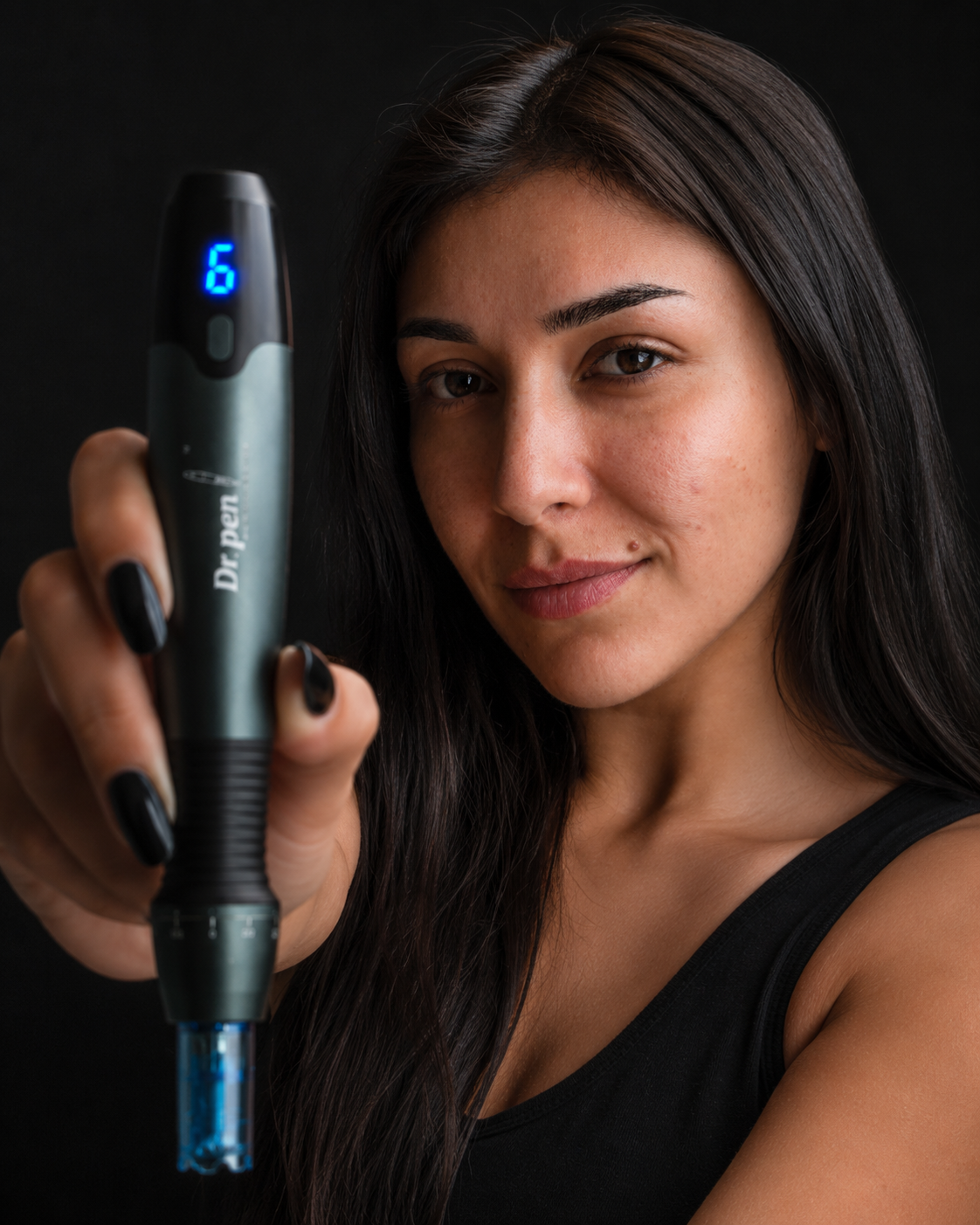
Before-and-after photos are one of the first things people look for when researching microneedling for wrinkles. They can be useful, but they can also be misleading if you do not know what the camera is actually showing.
A good set of microneedling photos does not usually show a dramatic overnight transformation. More often, it shows gradual softening of fine lines, a smoother skin surface, improved firmness and a healthier-looking texture over several weeks or months. The key is knowing the difference between true collagen remodeling and temporary changes caused by lighting, swelling, hydration or facial expression.
If you are comparing microneedling for wrinkles before and after images while deciding whether to try a Dr. Pen device, visit a professional or upgrade your cartridges, use the guide below to judge results more accurately.
What microneedling before-and-after photos can really show
Microneedling works by creating controlled microchannels in the skin. This process triggers the skin’s repair response, which can support collagen and elastin production over time. If you want a refresher on the basics, Dr. Pen Store has a helpful overview of what microneedling is and how it works.
For wrinkles, before-and-after photos are most useful for showing changes in surface quality. Fine lines may look less etched, makeup may sit more smoothly and skin can appear more even when light reflects off the face. This is why many credible microneedling results look subtle at first. The skin is not being filled like it would be with dermal filler, and muscles are not being relaxed like they would be with wrinkle relaxers. Instead, the visible change depends on how your skin responds to repeated collagen induction.
Photos are less reliable for proving exact depth reduction in wrinkles. A slightly different smile, raised eyebrow, camera angle or light source can make forehead lines, crow’s feet and smile lines look better or worse. This does not mean photos are useless. It means you need to read them carefully.
The wrinkle changes that appear most clearly in photos
Microneedling tends to photograph best when the concern is fine texture rather than deep folds. The thinner and more surface-level the line, the easier it is to see gradual improvement in consistent images.
Fine lines and crepey texture
Fine lines around the cheeks, mouth and under-eye area are often the first changes people notice in before-and-after photos. The skin may look less papery, especially when photographed in natural light from the same angle.
Crepey texture can also appear smoother as the skin barrier recovers and collagen remodeling progresses. This is not always a straight-line improvement. Some people look dry or flaky in the early healing phase before the skin looks smoother.
Crow’s feet and forehead lines
Crow’s feet can soften in photos, especially when the face is relaxed. However, expression lines are partly caused by repeated muscle movement, so a big smile in the before photo and a smaller smile in the after photo can exaggerate results.
Forehead lines are similar. Microneedling may help with skin texture and the appearance of static lines, but it will not stop the forehead muscles from moving. For this reason, the most trustworthy photos show both a relaxed expression and a repeated expression.
Smile lines and deeper folds
Nasolabial folds and deeper smile lines may look slightly smoother if the surrounding skin becomes firmer. Still, microneedling is not designed to reposition facial volume. If a fold is caused mainly by volume loss or skin laxity, photos may show modest improvement rather than a dramatic lift.
| Wrinkle concern | What before-and-after photos may show | What photos cannot prove by themselves |
|---|---|---|
| Fine cheek lines | Smoother texture and less visible shallow lines | Exact collagen increase beneath the skin |
| Crow’s feet | Softer lines when the face is relaxed | Whether expression strength has changed |
| Forehead lines | Improved texture across the forehead | Permanent reduction of muscle-related creasing |
| Under-eye crepiness | More even texture and less dryness | Suitability for every under-eye area |
| Smile lines | Slight softening around the fold | Replacement of lost facial volume |
The realistic timeline behind wrinkle photos
One of the biggest mistakes people make is judging microneedling too early. Immediately after a session, skin may look plumper because of temporary swelling and increased blood flow. That short-term glow can be encouraging, but it is not the same as the final result.
The FDA’s microneedling device safety guidance notes that microneedling devices create small punctures in the skin and should be used with attention to safety, instructions and potential risks. From a results perspective, that controlled injury is only the beginning. The visible wrinkle-softening process depends on healing and remodeling, which takes time.
| Photo timing | What you might see | How to interpret it |
|---|---|---|
| Immediately after | Redness, warmth, mild swelling or a temporary glow | Not a final wrinkle result |
| 2-7 days after | Dryness, tightness, flaking or rough texture | Part of the recovery window for many users |
| 2-4 weeks after | Skin may look calmer, brighter and slightly smoother | Early changes may be visible, but collagen remodeling is still developing |
| 6-12 weeks after | Fine lines may look softer in consistent photos | More useful timing for judging visible wrinkle changes |
| After a series | Texture, firmness and shallow lines may show clearer improvement | Best judged with standardized photos over time |
For a closer look at the normal recovery phase, see Dr. Pen Store’s guide to what should happen after microneedling. Understanding the healing stage helps you avoid confusing temporary redness or dryness with a poor final result.
How to judge microneedling before-and-after photos for wrinkles
The best before-and-after photos are boring in the right way. They use the same lighting, same expression, same distance from the camera and same skin preparation. Dramatic lighting changes may make a photo more impressive, but they make it less useful.
When you compare photos, look for these signs of a fair comparison:
- The face is photographed from the same angle and distance.
- Lighting comes from the same direction in both images.
- The person has the same facial expression in both photos.
- Skin is bare or makeup use is clearly the same.
- The after photo includes the timing, such as 8 weeks after a session or after 3 treatments.
- Texture, pores and fine lines are visible rather than blurred by filters.
If a result photo is cropped tightly, heavily smoothed or taken under softer light, be cautious. Skin naturally looks younger when shadows are reduced and texture is blurred. A credible photo should still show real skin.

What strong wrinkle results usually have in common
The most convincing microneedling wrinkle photos tend to share a few traits. They show gradual change instead of an instant makeover. They focus on texture and firmness rather than claiming to erase every line. They also include enough time between photos for collagen remodeling to matter.
Good results are often more noticeable across the whole face than on one single crease. For example, a person may still have forehead lines after microneedling, but their skin may reflect light more evenly, look less dull and show fewer tiny crosshatch lines when relaxed. That overall improvement can make the face look fresher even when deeper wrinkles remain.
This is especially relevant for people comparing device options for at-home use. If your goal is maintenance, smoother texture and gradual support for aging skin, microneedling may align with your expectations. If your goal is immediate removal of deep folds, you may need a consultation with a licensed professional to discuss other options.
Why some microneedling wrinkle photos disappoint
Not every before-and-after photo will show a clear change. That can happen for several reasons, and it does not always mean microneedling has failed.
First, the wrinkle type matters. Fine lines from surface texture and early collagen loss are different from deep folds caused by facial structure, volume loss or strong repeated expressions. Microneedling can support skin quality, but it cannot change every cause of a wrinkle.
Second, the treatment plan matters. A single session may not create enough visible change to photograph clearly, especially for mature skin or deeper lines. Many people evaluate results after a series rather than after one use.
Third, technique and aftercare matter. Over-treating the skin, using the wrong cartridge, reusing cartridges or skipping sun protection can interfere with results and increase the chance of irritation. Microneedling creates temporary openings in the skin, so hygiene and proper cartridge handling are not optional.
Finally, photography can hide progress. If the before photo is taken in harsh side lighting and the after photo is taken in flat front lighting, results may look exaggerated. If the reverse happens, real improvement may look underwhelming.
At-home microneedling photos versus professional treatment photos
Before-and-after galleries from clinics often show more dramatic results because professionals can assess the skin in person, choose appropriate treatment settings and combine microneedling with clinical protocols. At-home users should keep expectations more conservative and follow device instructions carefully.
This does not mean at-home microneedling has no place. Many Dr. Pen customers are interested in ongoing skin maintenance, texture refinement and visible skin renewal at home. The important distinction is that safe, consistent use matters more than trying to copy professional treatment intensity.
If you are choosing a device, authenticity also matters. Counterfeit pens and cartridges can create problems with fit, performance and hygiene confidence. Dr. Pen Store focuses on genuine Dr. Pen devices, replacement cartridges and compatible skincare products, with manufacturer-verifiable authenticity and support for shoppers comparing models.
For people researching fine lines specifically, Dr. Pen Store also covers whether microneedling can get rid of fine lines, which is a useful companion topic if your wrinkles are mostly shallow or early-stage.
What to photograph if you want to track your own results
If you plan to take your own microneedling before-and-after photos, set up a simple repeatable system before your first session. You do not need a studio. You need consistency.
Take photos in the same room, at the same time of day if possible and in the same lighting. Clean skin is best because makeup can fill lines and change how texture appears. Capture the front of the face and both sides. For expression-related wrinkles, take one relaxed photo and one photo making the same expression each time.
It also helps to track dates and context. Note the device used, cartridge type, general treatment area and any skincare products used after treatment. Do not photograph only on your best skin days. A realistic photo log includes the early redness phase, the dry phase and the smoother weeks that follow.
Safety signs that matter more than the photo
A good after photo is not worth unsafe treatment. Stop and seek medical advice if you experience signs of infection, prolonged swelling, unusual pain, blistering, spreading redness or other concerning reactions. People with active acne lesions, skin infections, certain inflammatory skin conditions, a history of poor wound healing or a tendency toward keloid scarring should speak with a qualified professional before microneedling.
Use sterile cartridges, do not share cartridges and do not reuse disposable needle cartridges. Follow the instructions for your specific Dr. Pen model and cartridge. If you are unsure whether a device, needle length or treatment area is appropriate, ask a licensed skincare or medical professional.
Frequently Asked Questions
How soon do before-and-after photos show wrinkle improvement after microneedling? Some people notice a temporary glow within days, but more meaningful wrinkle changes usually take several weeks because the skin needs time to heal and remodel collagen. Photos taken around 6-12 weeks after treatment are often more useful than immediate after photos.
Does microneedling completely remove wrinkles? Microneedling may soften the appearance of fine lines and improve skin texture, but it should not be expected to erase every wrinkle. Deep folds, strong expression lines and volume-related creases often need a different treatment approach.
Why do some microneedling before-and-after photos look dramatic? Dramatic photos may reflect a strong treatment response, but they can also be influenced by lighting, swelling, makeup, camera angle or facial expression. The most trustworthy comparisons use the same conditions in both images and clearly state the timing.
Are at-home microneedling results the same as professional results? Not usually. Professional treatments can be customized in a clinical setting, while at-home microneedling should be more conservative and performed according to device instructions. At-home users often focus on gradual maintenance and texture improvement.
What should I look for when buying a microneedling device for wrinkles? Look for a genuine device, compatible sterile cartridges, clear instructions and reliable support. Authenticity is especially important because counterfeit devices and cartridges may not offer the same confidence in fit, quality or handling.
Ready to compare genuine Dr. Pen options?
Microneedling before-and-after photos for wrinkles are most helpful when they set realistic expectations: smoother texture, softer fine lines and gradual improvement rather than instant erasure. If you are ready to research a device or replace cartridges, shop genuine Dr. Pen microneedling pens, cartridges and skincare products directly from Dr. Pen Store.