


If you are considering a needle skin treatment after fillers, ask your injector to review the plan before you book. The answer depends on what was injected, where it was placed, how the area has healed and whether the proposed treatment uses radiofrequency energy. A fixed waiting period alone cannot answer all of those questions.
This guide focuses on microneedling after dermal fillers. It explains what to bring to your consultation, which safety questions matter and why professional treatment and at-home needling require different decisions.
First, clarify which treatment you mean
“Needle treatment” can describe several procedures that work differently. Standard microneedling uses fine needles to create controlled skin injuries, stimulating a healing response that can gradually improve certain scars, fine lines and uneven texture. It does not replace the volume or structural support provided by filler.
Radiofrequency microneedling, often called RF microneedling, combines needles with energy that heats tissue. That added heat changes the risk assessment, particularly when another treatment has already placed material beneath the skin.
Dermal fillers also differ. Hyaluronic acid fillers, calcium hydroxylapatite products and poly-L-lactic acid products do not have identical properties or treatment considerations. Your clinician needs the actual product name, not just a description such as “cheek filler.”
The FDA’s information on dermal fillers explains their uses and risks. Filler injections, botulinum toxin injections and microneedling are separate procedures, even when a clinic offers them together.
When can you have a needle skin treatment after fillers?
There is no universal waiting period that makes every combination appropriate. Your injector and treating clinician should agree on the timing, especially if different practices are involved.
Ask whether swelling, bruising, tenderness or any injection-site reaction needs to resolve before reassessment. Persistent symptoms deserve evaluation rather than simply extending a calendar reminder.
If a clinic gives you a standard interval, such as two weeks, ask what that recommendation assumes about your filler and the proposed procedure. Reaching that date does not establish that every treatment depth, device or facial area is suitable.
Timing may also differ when you are treating the same area versus a separate area. Cheek filler followed by cheek microneedling requires a different discussion from lip filler followed by treatment of forehead scars. Neither situation should be cleared solely by an online schedule.
If both procedures are still being planned, ask whether changing their order would make assessment and recovery simpler.
Questions to take to your consultation
“Do you have enough information about my filler?”
For a needle skin treatment consultation, bring your injection record if possible. Photographs can help explain your concerns, but they cannot reliably establish which product was used or its placement.
| Information to share | Why your clinician needs it |
|---|---|
| Product name and injection date | Identifies the filler and how recently it was placed |
| Areas treated and amount injected | Helps map the proposed treatment against the injection sites |
| Placement details, if available | Helps assess possible overlap with the planned procedure |
| Previous swelling, lumps or infection | May change whether treatment should proceed |
| Other recent cosmetic procedures | Helps avoid overlapping recovery periods or irritation |
If the product or placement is unknown, say so. Uncertainty is a reason to obtain records or seek further assessment, not to assume the filler is too deep to matter.
“Will you treat directly over the filler?”
Ask how the proposed needle skin treatment relates to each filler-treated area, rather than accepting a general statement that the procedures are compatible.
Useful questions include: Which areas will you avoid? What depth do you intend to use? Does that plan change across the face? Who will assess any existing lumps or asymmetry before treatment?
A device’s depth setting does not, by itself, prove separation from filler. Facial anatomy, injection technique and tissue thickness all affect the assessment. Do not use settings shared online to select a depth for yourself.
If the clinician recommends proceeding, ask them to explain the reasoning for your situation and document any areas that should remain untreated.
“Is this standard microneedling or RF, and why?”
For an energy-based needle skin treatment, ask about both needle penetration and the intended heating zone. “RF is better” is not a sufficient explanation of suitability after fillers.
Ask what benefit RF is expected to add, what evidence supports using that particular device in your circumstances and whether standard microneedling or postponement would be a reasonable alternative. RF introduces heat-related risks, including burns and injury to deeper tissue.
Evidence about one filler, device or treatment protocol should not be generalized to every combination. Laboratory findings also do not automatically establish what happens in a living patient.
Be cautious of absolute promises that treatment can never affect filler, or claims that every needling procedure will dissolve it. Both statements overlook important differences between procedures.
Which symptoms or medical factors could change the plan?
Tell the clinician about active acne, cold sores, rashes, open wounds or any suspected skin infection. A history of keloids, poor wound healing, immune suppression or significant post-inflammatory hyperpigmentation also deserves discussion.
Share your medication list, including blood thinners, retinoids and medicines that affect immunity. Do not stop prescribed medication to qualify for a cosmetic procedure without speaking to the prescriber.
Skin tone matters when discussing pigment changes, but darker skin is not automatically a reason to exclude treatment. Ask about the clinician’s experience treating your skin tone and how they reduce inflammation and pigmentation risk.
The FDA’s microneedling device guidance describes risks and limitations, including bleeding, infection and pigment changes. Adding filler history makes individualized screening more important, not less.
If a filler-treated area is already red, painful, swollen or developing lumps, have it assessed before creating additional skin injury.

What should recovery and aftercare look like?
After a needle skin treatment, the written recovery plan should explain what is expected from the specific procedure and what requires a call. Redness, sensitivity and some swelling can occur, but the intensity and duration depend on treatment depth, device type and your skin.
During the first couple of days, appearance alone may not distinguish normal healing from a developing problem. Ask how symptoms should progress and whether your filler history changes the follow-up plan.
Your clinician should specify when to restart makeup, retinoids, exfoliating acids and other potentially irritating products. Ask about cleansing, sun protection, exercise, swimming and heat exposure rather than assuming all activities can resume together. Our guide to what to do and avoid after microneedling provides background for that discussion, but your clinician’s procedure-specific instructions take priority.
For moisture support, ask whether iS Clinical Sheald Recovery Balm 60g, which contains ceramides and oat kernel extract, fits your recovery plan. A topical balm is not a treatment for infection or a filler complication, and it should not be assumed suitable for needling into the skin.
Know who to contact if symptoms worsen
Before leaving, obtain an after-hours contact and a clear escalation plan. Increasing redness, warmth, drainage, worsening pain, fever or persistent new lumps warrant prompt medical advice. Do not repeatedly massage a swollen filler-treated area unless the responsible clinician instructs you to do so.
After a recent filler injection, severe or unusual pain, blanching or dusky discoloration requires immediate assessment by the injector or urgent medical care because a blood-supply problem must be ruled out. Do not dismiss these signs as routine microneedling recovery.
New vision changes, severe eye pain or stroke-like symptoms require emergency medical care immediately. Do not wait for a routine clinic response.
Is at-home microneedling an alternative after fillers?
An at-home needle skin treatment is not a safe workaround when a clinic recommends waiting or avoiding an area. A home user generally cannot confirm filler placement, assess a developing complication or reproduce a clinical infection-control environment.
Genuine equipment and a new cartridge do not resolve those limitations. Cartridge compatibility, device instructions and single-use requirements matter, but they cannot establish whether treating over your filler is medically appropriate.
Do not copy professional depth settings, reuse cartridges or use a home device to try to break down lumps. Lumps can have different causes and need assessment before treatment.
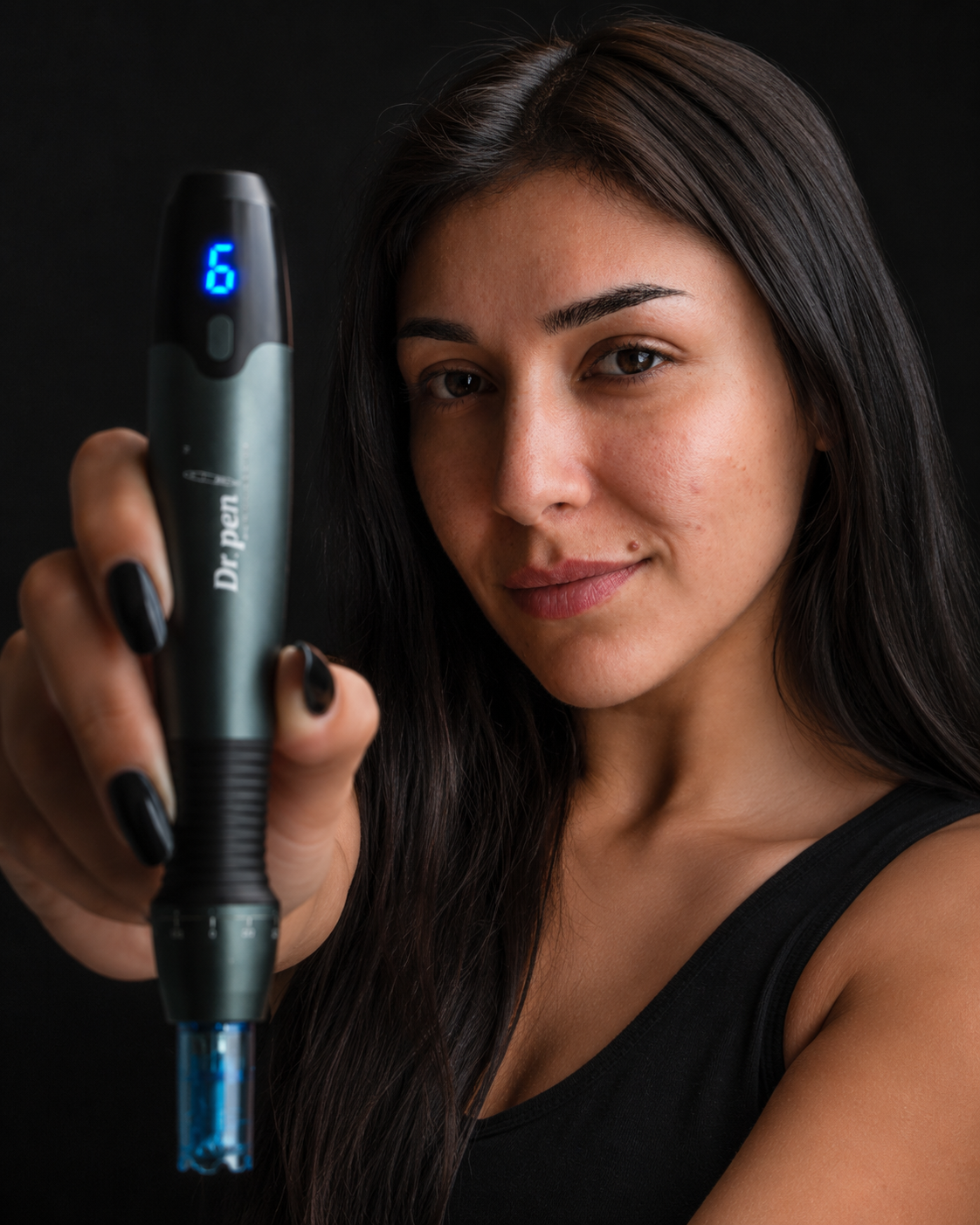
If you already own a Dr. Pen device, tell your injector the model and intended treatment area. Ask whether you should stop using it and what conditions must be met before reconsidering treatment. Do not interpret the absence of visible swelling as clearance to begin.
How should you judge a clinic’s recommendation?
A useful consultation connects the proposed treatment to a specific concern. Ask whether the goal is scar improvement, texture refinement or fine-line treatment, and how much improvement is realistic without changing your filler plan.
The clinician should explain alternatives, including doing nothing for now. They should also identify who handles complications, whether follow-up is included and what would cause them to postpone a session.
Be wary if a package is sold before anyone asks about your filler history. The number and spacing of sessions should remain adjustable to healing and response, rather than being treated as a commitment to proceed regardless of symptoms.
A careful provider may recommend contacting your injector, obtaining records or delaying treatment. Those steps are useful safeguards, even when they make scheduling less convenient.
Frequently asked questions
Can a needle skin treatment dissolve my filler? Microneedling is not an established method for removing dermal filler. Whether a procedure could affect a particular filler depends on factors such as the material, placement and use of heat. Ask your injector to assess unwanted filler rather than trying to alter it with a device.
Is two weeks after filler always enough? No. A standard interval does not account for every product, treatment area, healing response or device. Ask for clearance based on your records and an assessment, especially if symptoms persist.
Can microneedling and filler be performed on the same day? Some clinicians may use combined protocols in selected circumstances, but that does not make same-day treatment appropriate for everyone. Ask about the rationale, procedure order, infection-control measures and alternatives before agreeing.
What if I do not know which filler I received? Contact the original injector for the product name, date and treatment record. If records cannot be obtained, the next clinician should account for that uncertainty when deciding whether to proceed.
Should I book another session if swelling has not settled? Contact the treating clinician first. Persistent or worsening swelling should be assessed before additional treatment, particularly when a filler-treated area is involved.
Choose aftercare once the treatment plan is clear
Before booking, obtain agreement on timing, treatment areas, device type and follow-up. Then choose skincare that fits the clinician’s instructions. You can review Dr. Pen Store’s clinical skincare collection with your provider to identify appropriate recovery products, without assuming that every product is suitable immediately after treatment.