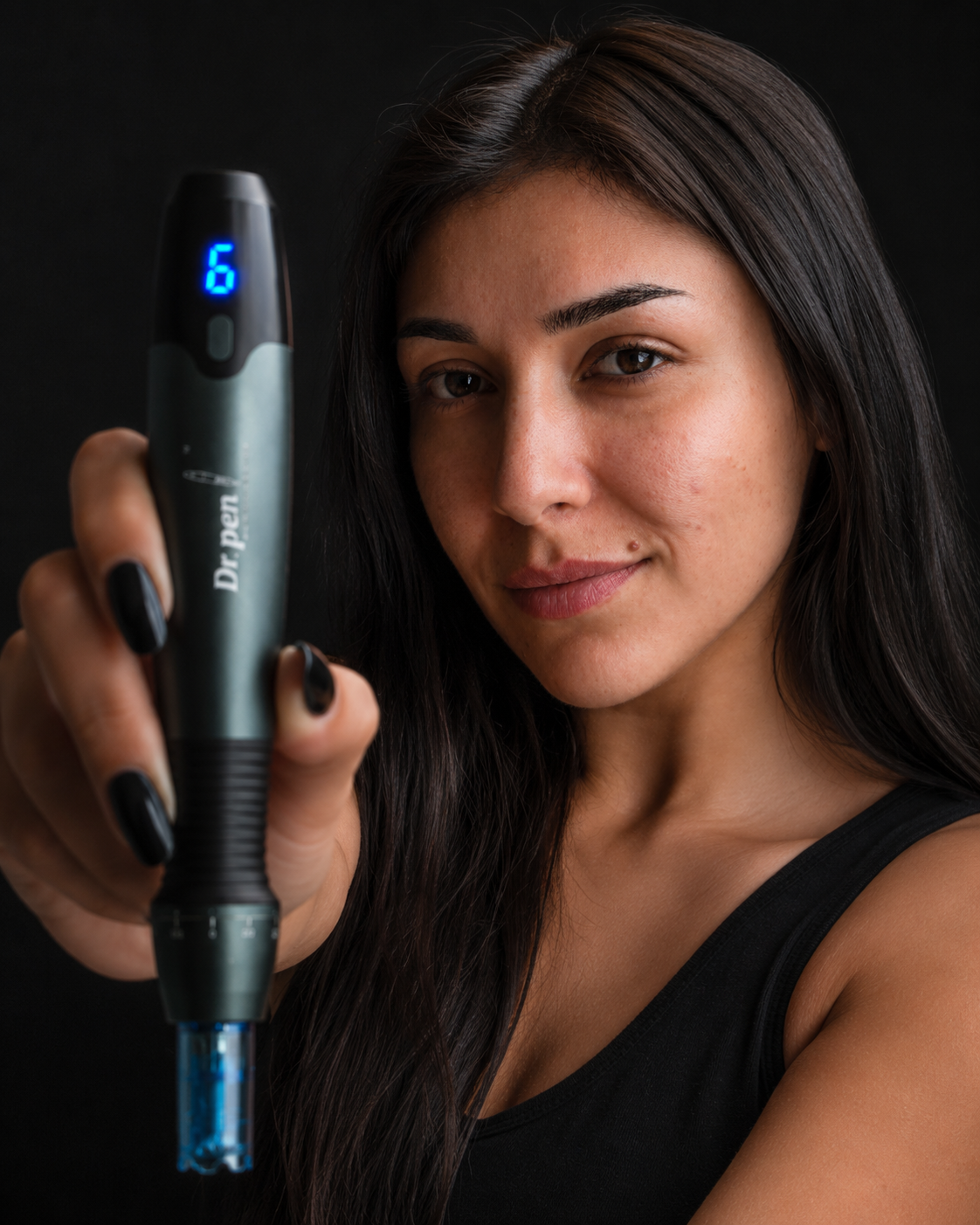
Nano needling is often described as the gentler cousin of microneedling, which can make it tempting to use it often. The better approach is to treat it like a skin barrier treatment, not a daily exfoliation habit. For most healthy adult skin, a sensible starting point is once every 7 to 14 days, then adjusting based on redness, dryness, stinging and your skincare routine.
Some experienced users with resilient skin may tolerate weekly sessions well. Sensitive, dry or reactive skin often does better with a session every 2 to 4 weeks. If your skin is irritated, sunburned, broken out or still recovering from another treatment, wait. More frequent sessions do not automatically mean better results.
What counts as nano needling?
Nano cartridges use very short, fine tips designed to work at the skin's surface. They are commonly used to support the appearance of smoother texture, boost glow and help compatible serums spread more evenly across the skin. Unlike deeper microneedling, nano tips are not chosen for collagen induction at depth, acne scar remodeling or stretch mark treatment.
If you are new to the terminology, Dr. Pen Store has a helpful guide explaining what nano needles are and how they differ from traditional microneedling cartridges.
The key point for scheduling is simple: nano needling is more superficial than many microneedling sessions, so it can usually be done more often. That does not mean the skin has no recovery period. Even a surface-level treatment can trigger temporary redness, tightness or sensitivity, especially if paired with strong skincare actives.
The safest starting frequency
A conservative schedule helps you learn how your skin responds before increasing frequency. If you are using a Dr. Pen device at home with a compatible nano cartridge, start with one session, then give your skin at least a full week to recover and settle.
For many users, the best rhythm looks like this:
| Skin type or situation | Suggested starting schedule | When to wait longer |
|---|---|---|
| Normal, non-reactive skin | Every 7 to 14 days | If redness or dryness lasts beyond the next day |
| Dry or sensitive skin | Every 2 to 4 weeks | If skin stings when applying basic moisturizer |
| Oily, resilient skin | Every 7 to 10 days | If breakouts, peeling or irritation appear |
| First-time user | Once, then reassess after 10 to 14 days | If you are unsure whether your skin has fully recovered |
| Before an event | Try it weeks in advance first | Do not test a new treatment right before an event |
| Active acne, rash or sunburn | Do not treat | Wait until the skin is calm and intact |
A weekly routine may be enough for brightening and product absorption goals. If you are using nano needling as part of a broader skincare plan, such as alternating with exfoliants, retinoids or professional treatments, space sessions farther apart so your barrier is not constantly being challenged.
Why daily nano needling is not recommended
Daily use is one of the most common mistakes. The skin barrier needs time to rebalance after any treatment that increases sensitivity or product penetration. When you repeat sessions too often, you may end up with the opposite of what you wanted: dullness, flaky texture, burning, breakouts or a tight, shiny surface that signals irritation.
This matters even more if you use active ingredients. Retinoids, exfoliating acids, benzoyl peroxide, vitamin C formulas and some brightening products can be useful in a skincare routine, but they may feel too strong immediately before or after nano needling. A gentle hyaluronic acid serum or a simple hydrating product is usually a safer match than an aggressive active.
Frequency is not only about the cartridge. It is also about what your skin is exposed to in the 48 hours around the session.
Factors that should change your schedule
Your ideal interval depends on more than your skin type. Pay attention to how your skin behaves after each session and adjust before irritation builds.
Your skin's recovery time
Mild pinkness that fades quickly can be normal. Persistent redness, burning, swelling, flaking or tenderness means your skin needs more time. If your skin still feels sensitive when applying a bland moisturizer the next day, do not nano needle again that week.
A good rule: your skin should look calm, feel comfortable and tolerate your usual gentle products before your next session.
The products you apply with it
Nano tips are often used with hydrating serums, but not every serum belongs in a treatment session. Avoid fragranced products, exfoliating acids, retinoids and formulas that have caused tingling in the past. If a product would be risky on compromised skin, do not pair it with nano needling.
For the 24 to 48 hours after treatment, keep the routine plain: gentle cleanser, hydrating serum if tolerated, moisturizer and sun protection during the day.
Your device and cartridge hygiene
Use a new, sterile cartridge for each session and make sure it is compatible with your device model. Do not reuse cartridges, even if they look clean. Reuse can dull the tips and increase contamination risk.
This is also where buying genuine products matters. A poorly made or counterfeit cartridge can have inconsistent tip quality, poor fit or questionable sterility. Dr. Pen Store focuses on genuine Dr. Pen devices and replacement cartridges, so shoppers can match cartridges to their device with more confidence.
Other treatments in your routine
If you recently had a chemical peel, laser treatment, professional microneedling, waxing, intense exfoliation or a prescription skin treatment change, give your skin extra time. Stacking treatments too closely is a fast way to disrupt the barrier.
If you are deciding whether your goal calls for nano or traditional microneedling, this comparison of micro-needles vs nano-needles can help you choose the right cartridge type before setting a schedule.
A simple month-by-month routine
If you are starting from scratch, do not build the most intense plan first. Build the plan your skin can repeat comfortably.
During the first month, try one session in week one, then wait 10 to 14 days before deciding on another. Track how your skin looks the same evening, the next morning and three days later. If your skin stays calm, you can move toward weekly or every-other-week sessions depending on your goals.
By the second month, many users settle into one of three patterns. Weekly sessions may suit resilient skin focused on glow and serum absorption. Every 2 weeks suits most people who want consistency without overdoing it. Every 3 to 4 weeks is better for sensitive skin or anyone using retinoids, acne treatments or exfoliants in the same routine.
Maintenance does not need to be aggressive. If your skin already looks smooth and balanced, less frequent nano needling may be enough.
Signs you should take a break
Your skin will usually tell you when the schedule is too frequent. Do not ignore early irritation just because the treatment feels gentle.
Take a break if you notice:
- Redness that lasts longer than 24 to 48 hours
- Burning, itching or stinging with basic products
- New flaking, rough patches or unusual dryness
- Breakouts that appear after repeated sessions
- Increased sensitivity to sun, sweat or skincare
- Dark marks or lingering discoloration after irritation
- Any sign of infection, including warmth, swelling, pus or increasing pain
If symptoms are significant or do not improve, contact a licensed healthcare professional. The FDA's overview of microneedling device benefits, risks and safety is also worth reading for broader context on skin needling precautions, even though nano tips are more superficial than many medical microneedling treatments.

Nano needling vs microneedling frequency
Nano needling and microneedling should not be scheduled the same way. Nano tips are used at the surface and usually have minimal downtime. Microneedling cartridges, especially at greater depths, can require a longer recovery window because they are intended to create controlled micro-injuries in the skin.
Here is the practical difference:
| Treatment type | Typical purpose | General spacing approach |
|---|---|---|
| Nano cartridges | Glow, surface texture, serum absorption support | Often weekly to every few weeks, depending on tolerance |
| Very shallow microneedling | Mild texture, early fine lines, product routine support | Usually less frequent than nano sessions |
| Deeper microneedling | Acne scars, deeper wrinkles, stretch marks or collagen-focused goals | Often spaced several weeks apart and best guided by a professional |
Do not use deeper microneedling as often as nano needling. If you alternate both, let the deeper treatment fully heal first. Many users prefer to separate microneedling and nano sessions by at least a couple of weeks, with longer spacing after more intensive treatments.
For depth planning, Dr. Pen Store's guide on what needle size to use for microneedling explains why different skin goals require different cartridge depths and recovery expectations.
How to make each session easier on your skin
The right schedule matters, but technique and aftercare are just as important. A gentle weekly session can still irritate the skin if you press too hard, use the wrong serum or skip basic hygiene.
Before treatment, cleanse your skin and work with clean hands. Use a new cartridge, check that it fits your device properly and follow the instructions for your specific Dr. Pen model. Nano tips do not require pressure, bleeding or aggressive passes. If your skin becomes hot, painful or sharply irritated, stop.
After treatment, keep the routine boring in the best possible way. Avoid makeup for the immediate recovery window if your skin is red or sensitive. Skip retinoids, exfoliating acids, scrubs, strong vitamin C products, fragranced skincare, pools, saunas and heavy sweating for at least 24 hours, or longer if your skin asks for it. During the day, protect your skin from UV exposure.
A calm recovery is a better sign of progress than dramatic redness.
Who should avoid nano needling or ask a professional first?
At-home skin needling is not right for every situation. Avoid treatment over active acne lesions, cold sores, open cuts, rashes, sunburn, eczema flares, psoriasis flares or irritated skin. Do not treat areas with suspicious moles or lesions.
Ask a licensed professional before using a device if you have a history of keloid scarring, poor wound healing, diabetes, immune suppression, active skin infection, a bleeding disorder or if you use medications that affect healing or bleeding. If you are pregnant, breastfeeding or under dermatologic care, get personalized guidance before starting.
Professional aestheticians and med spa providers may use different protocols based on training, state regulations and client history. At-home users should stay conservative and follow device instructions.
So, how often can you nano needle your skin?
For most people, the practical answer is once every 1 to 2 weeks. Sensitive skin may need 2 to 4 weeks between sessions. Resilient skin may tolerate weekly sessions, but daily use is not a good idea.
The best frequency is the one your skin can recover from completely. If your skin is calm, hydrated and comfortable before the next session, your schedule is probably reasonable. If you are chasing results through more frequent treatments, step back and focus on consistency, gentle products, sun protection and cartridge quality instead.
Frequently Asked Questions
Can I nano needle every day? No. Daily nano needling can irritate the skin barrier and increase dryness, stinging or breakouts. Most users should start every 7 to 14 days and adjust based on recovery.
Is once a week too often? Once a week can be fine for some healthy, non-reactive skin, especially when using a gentle serum and proper aftercare. If you have dryness, redness or sensitivity, choose every 2 to 4 weeks instead.
Can I use retinol after nano needling? It is safer to avoid retinol for at least 24 to 48 hours after treatment, or longer if your skin is sensitive. Reintroduce it only when your skin feels completely calm.
Should nano needling make my skin bleed? No. Nano tips are designed for surface-level use and should not cause bleeding. Bleeding suggests you may be using the wrong cartridge, too much pressure or an inappropriate setting.
How long should I wait after microneedling before using a nano cartridge? Wait until the skin has fully healed. After deeper microneedling, that may mean several weeks. If you had a professional treatment, follow your provider's timeline.
Can I nano needle under my eyes? The under-eye area is delicate. Only treat it if your device instructions allow it, use very light pressure and avoid the eyelids, lash line and any irritated skin. When in doubt, ask a licensed professional.
Choose genuine Dr. Pen cartridges for a safer routine
Your schedule is only one part of a good treatment plan. Compatible, genuine cartridges and a reliable device matter too. If you are building an at-home routine or replacing cartridges for your current pen, explore the genuine Dr. Pen devices, nano cartridges and skincare options available at Dr. Pen Store.