

Reusing a microneedling stamp at home is not automatically safe, even if you are the only person using it. A reusable handle does not mean reusable needles. Whether any component can be used again depends on its labeling, intended use and manufacturer’s instructions, not whether it still looks clean.
The clearest rule is straightforward: never reuse a needle head or cartridge labeled single-use. Washing it or soaking it in alcohol does not override that instruction. For a fixed-head stamp with unclear replacement or cleaning guidance, do not improvise a reuse routine.
This distinction matters when shopping, too. “Reusable,” “disinfectable” and “sterile” describe different things. Before buying replacement supplies or scheduling another session, identify exactly which part of your device each claim applies to. A low purchase price offers little value if safe replacement parts or reliable instructions are unavailable.
When can you reuse a microneedling stamp at home?
Start with the instructions for the exact model, rather than advice for a similar-looking stamp. Some products have a reusable body and disposable head. Others have needles permanently attached, so discarding the needle assembly means discarding the whole tool.
Use this distinction when reading the packaging:
| Component or label | What it means for reuse |
|---|---|
| Reusable handle with a single-use needle head | Maintain the handle as instructed and use a new head for each treatment session |
| Entire stamp labeled single-use | Discard the complete device after its labeled use |
| Fixed needle head advertised as reusable | Check the full intended-use and reprocessing instructions; the advertising claim alone is insufficient |
| Missing instructions or unclear reuse labeling | Do not guess how to prepare it for another session |
| Nonpenetrating cosmetic tip | Follow its own cleaning and replacement instructions, not rules borrowed from needle cartridges |
If a device punctures skin, a home cleaning routine is not evidence that its needle head is safe to reuse. Discuss skin-penetrating treatment with a qualified healthcare professional rather than relying on a seller’s short cleaning tip.
The FDA’s guidance on microneedling devices specifically advises using a new needle cartridge for each patient and each treatment session. Cleaning a used cartridge does not remove that requirement.
Cleaning, disinfection and sterilization are different
These terms are often blurred in product descriptions, but they are not interchangeable.
Cleaning removes visible dirt, oils and other material. It is necessary for maintaining many reusable components, but a visibly clean surface is not necessarily free of microorganisms.
Disinfection inactivates many disease-causing microorganisms under specified conditions. It does not necessarily eliminate bacterial spores. Its effectiveness also depends on the product, contact time, surface condition and whether the equipment is compatible with that process.
Sterilization is a validated process intended to eliminate all forms of microbial life, including bacterial spores. A household alcohol soak is not equivalent to validated sterilization.
If you use a microneedling stamp at home, do not interpret “soak after use” as permission to reuse a single-use head. Alcohol, boiling water, peroxide and consumer UV boxes are not interchangeable shortcuts. They may also damage components or leave contamination in areas you cannot inspect.
The appropriate question is not simply whether a liquid kills germs. It is whether the manufacturer has specified a validated process for that exact reusable component and intended setting. If the instructions do not answer that question, a longer soak or stronger solution is not a reliable fix.
What to check before considering another session
Keep the packaging and instructions so you can distinguish the device’s intended use from claims made in a marketplace listing. A useful inspection begins with the label, not the appearance of the needles.
Check the following before opening or handling treatment supplies:
- Single-use status: Look for wording or symbols identifying disposable components and follow the more restrictive instruction if packaging is unclear.
- Sterile barrier: For a head supplied sterile, check that its individual package is sealed, undamaged and within its expiration date.
- Replacement availability: Confirm that replacement heads are intended for the exact device, not merely a visually similar model.
- Instructions: Locate the model-specific directions for handling, maintenance, replacement and disposal.
- Condition: Reject a component with bent tips, corrosion, residue, loose parts or other damage.
When assessing a microneedling stamp at home, passing a visual inspection is only one limited check. It cannot confirm sterility or extend a single-use label.
A broken sterile seal is also different from damaged outer shipping packaging. If the individual sterile barrier is open, wet or compromised, do not use that head. Ask the seller or manufacturer for guidance rather than attempting to recreate the original sterile condition yourself.
Authenticity matters, but it answers a separate question. Manufacturer-verifiable origin can help establish that a product is genuine; it does not establish that an opened or previously used head remains suitable for treatment.
Why a sharp-looking head can still be unsafe
Contamination is not always visible. Skin debris and microscopic material can remain around closely spaced needles or inside joints that are difficult to access. The absence of blood does not prove that a used head is clean enough for another treatment.
Repeated use and handling can also damage fine tips. You may notice obvious bending, but you cannot reliably assess every needle’s condition with the naked eye. A head that still feels sharp may nevertheless be unsuitable for use.
Reusing a microneedling stamp at home therefore involves more than checking whether it still enters the skin. Sharpness, cleanliness and suitability for reuse are separate questions. None can override a disposable designation.
Personal use does not eliminate these issues. Microorganisms from your own skin can cause problems when introduced through a disrupted skin barrier. Keeping a tool to yourself reduces one source of exposure, but it does not make used needles sterile.
Never share a personal-use stamp or needle head. The same caution applies to powered devices: sharing a microneedling pen raises contamination concerns that are not automatically resolved by attaching a fresh cartridge.
Stamps, pens and nano tips have different replacement rules
A manual stamp presses a stationary needle array against the skin. A motorized pen moves a cartridge mechanically. Neither design automatically makes a used needle assembly suitable for another session.
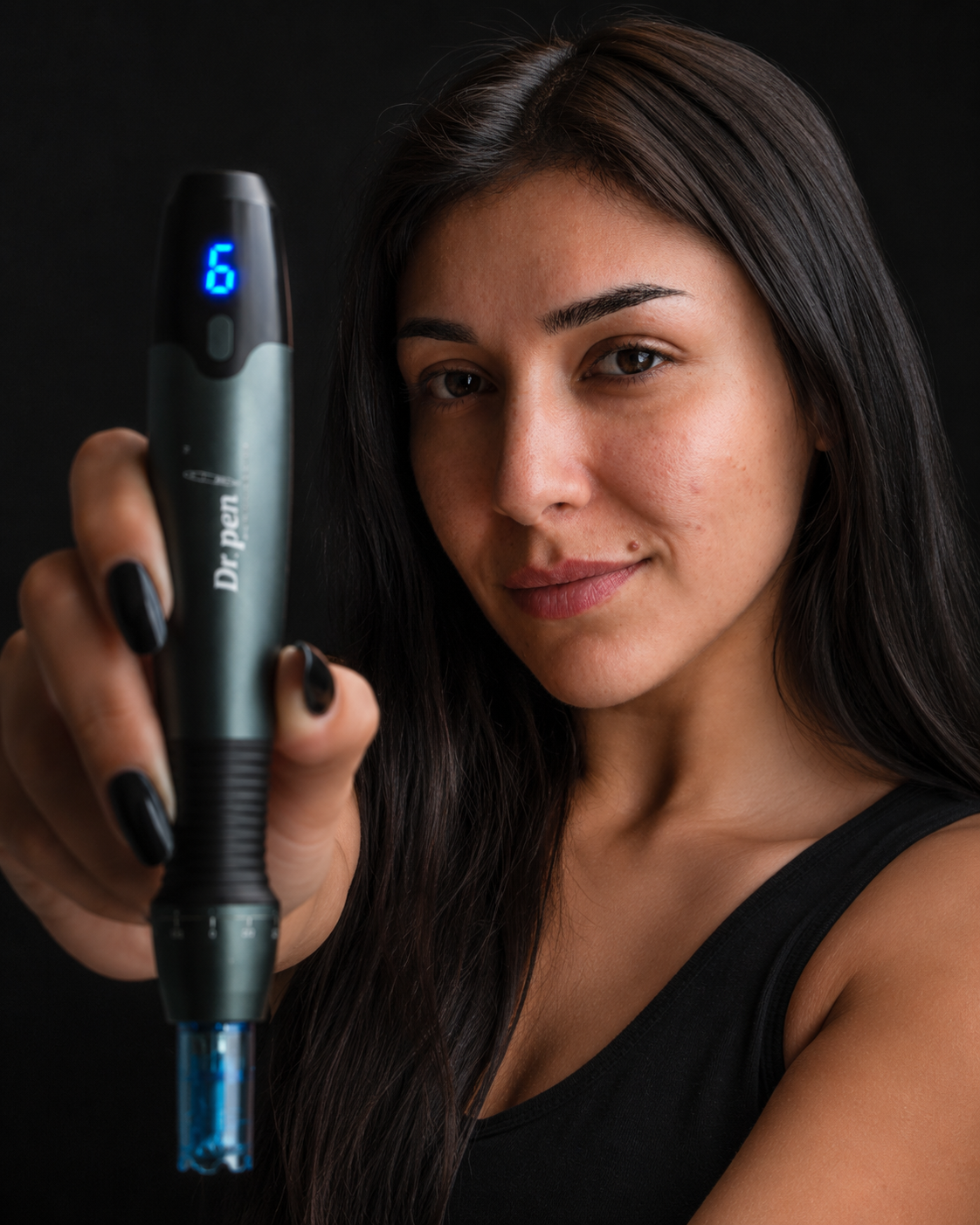
For a pen with disposable cartridges, the reusable body and treatment cartridge have separate maintenance requirements. Replacing the cartridge does not remove the need to maintain the body according to its instructions. Equally, cleaning the body does not make the old cartridge reusable.
Before replacing a microneedling stamp at home with a pen, compare intended use, compatible consumables and replacement requirements. Do not choose based only on adjustable depth, speed settings or claims that one design causes less downtime.
Nano tips belong in a separate category. For example, the Round Nano Replacement Cartridges for Hydra Pen H6 (5 pack) are a model-specific nano option described as not using real needles. They should not be treated as equivalent to skin-penetrating cartridges or as a substitute for professional treatment of deeper scars.
The absence of conventional needles does not justify assuming unlimited reuse or universal suitability. Check the H6 instructions for handling, replacement and compatible use. A five-pack describes the quantity supplied, not a validated number of sessions per tip.

Who needs extra caution before skin-penetrating treatment?
The reuse question comes after a more basic decision: whether the procedure is appropriate for your skin and health. A new sterile head cannot make an unsuitable treatment safe.
Postpone treatment over active infection, cold sores, inflamed acne lesions, broken skin or an eczema flare. Seek individualized advice if you have impaired healing, a weakened immune system, a bleeding disorder or take medication that affects bleeding or skin recovery. Do not stop a prescribed medication simply to make a home treatment possible.
People with a history of keloids, persistent pigmentation after inflammation or unusual scarring should discuss these risks with a dermatologist. Darker skin tones are not automatically unsuitable for professional microneedling, but inflammation can trigger post-inflammatory hyperpigmentation. Technique, treatment selection and aftercare matter.
If you are considering a microneedling stamp at home for acne scars, hair loss or another medical concern, obtain an assessment rather than selecting a deeper setting yourself. Superficial cosmetic use should not be presented as equivalent to treatment designed to reach living skin and remodel scar tissue.
FDA clearance is also specific to a device and its indications. It is not blanket permission for unsupervised home procedures or for every advertised use. The FDA advises choosing a healthcare provider with appropriate training and experience for microneedling procedures.
Handling and storage cannot rescue a disposable head
After a session, follow the disposal instructions for the used needle assembly. Where applicable, use an appropriate sharps container and follow local disposal requirements. Do not leave exposed needles loose in a bathroom drawer or household trash.
Maintain reusable components only as directed. Avoid immersing electrical parts unless the manufacturer explicitly permits it. A protective cap or storage case helps prevent accidental contact, but neither sterilizes the contents.
For unopened supplies, protect the individual sterile packaging from moisture, damage and unnecessary handling. The guide to storing a microneedling device between sessions explains the distinction between maintaining the reusable device and protecting sealed replacement cartridges.
Safe storage of a microneedling stamp at home does not reset its replacement schedule. Putting a used head back into its original container cannot restore the condition in which it was supplied.
If you have already reused a disposable head, stop using it. Seek medical care for increasing pain, spreading redness, warmth, pus or fever. Persistent swelling, worsening discoloration or other unexpected changes also warrant assessment. Do not continue stamping irritated skin to try to improve the result.
Compare ongoing costs, not just the purchase price
A low-priced stamp can become an expensive purchase if compatible replacement parts are unavailable or instructions are inadequate. Before buying, calculate the cost of the device plus the consumables required for each labeled session.
Beauty devices are often called an “investment,” but the comparison should remain practical. Upside Invest’s portfolio comparison tools evaluate financial holdings; for skincare equipment, compare ongoing spending, intended use and support rather than expecting a guaranteed return.
The relevant budget for a microneedling stamp at home must include replacement components when required. If a product only seems affordable when a disposable head is reused, it is not an appropriate choice for that budget.
Professional assessment may also prevent spending on an unsuitable device. A superficial cosmetic tool should not be purchased on the assumption that it will produce the same changes as a clinical procedure. Redness, peeling or temporary swelling is not proof of successful collagen remodeling.
Frequently asked questions
Can I reuse a stamp if I disinfect it with alcohol? Not if the stamp or needle head is labeled single-use. Alcohol disinfection is not sterilization and does not validate another treatment. For reusable components, follow the exact manufacturer instructions rather than a generic soaking recipe.
How many times can I use the same stamp head? There is no universal safe number. A single-use head is for its labeled use only. For any claimed reusable head, the manufacturer must provide applicable instructions and limits. Do not invent a replacement schedule based on appearance or online reviews.
Can I reuse a microneedling stamp at home if there was no bleeding? No bleeding does not establish that the head is uncontaminated or suitable for reuse. Follow its labeling regardless of whether treatment produced visible blood. Bleeding should not be a goal of an at-home cosmetic routine.
Is a nano cartridge the same as a microneedling stamp? Not necessarily. A nonpenetrating nano tip differs from an array of needles intended to puncture skin. Its purpose, expected effects and handling requirements may differ. Check the exact product instructions rather than transferring advice between devices.
Should I wait longer between sessions to make reuse safer? Waiting supports skin recovery when treatment is appropriate, but it does not sterilize a used head. Treatment frequency and component replacement are separate decisions. Do not shorten recovery time or extend disposable use to save supplies.
Choose clearly labeled, compatible replacements
Before your next purchase, identify the exact device model, whether its treatment head is disposable and which replacement components it accepts. Keep single-use needles separate from reusable handles in both your maintenance routine and your budget.
When browsing Dr. Pen Store, check the product’s intended use and compatibility before ordering. If either is unclear, ask support before opening the packaging. Clear instructions and the correct replacement component are more useful than a promise of unlimited reuse.