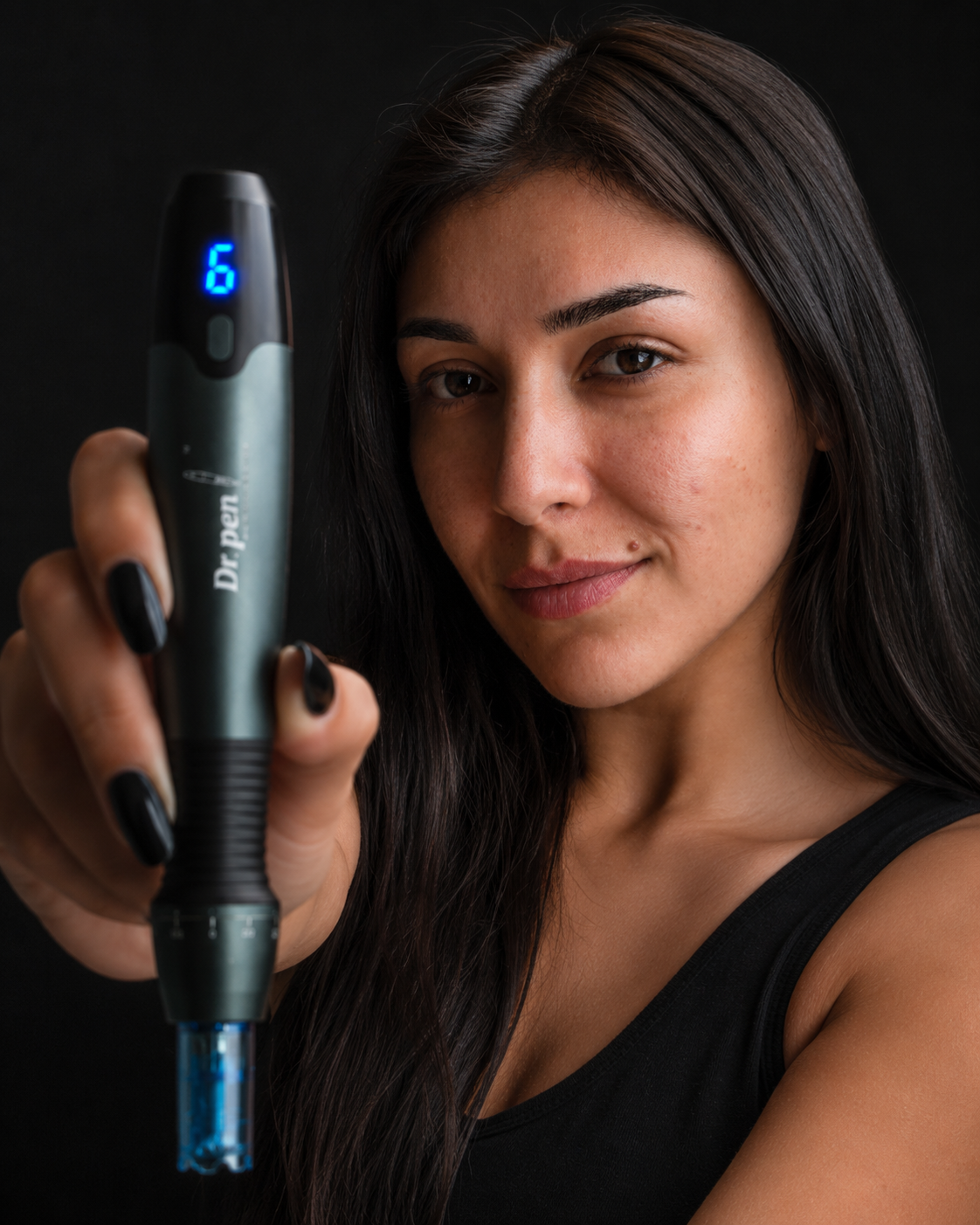
Under eyes microneedling can sound like a precise fix for crepey texture, fine lines and tired-looking skin. The reality is more cautious: the lower eyelid area is thin, vascular and close to the eye itself, so the safety bar is much higher than it is for cheeks, jawline or forehead treatments.
That does not mean every periocular treatment is off limits. It means you need to separate professional treatment around the orbital bone from risky do-it-yourself needling near the lash line. A device, cartridge or serum that works well on thicker facial skin may be inappropriate for mobile eyelid skin.
Is under eyes microneedling safe?
In the right hands, very conservative microneedling around the lower orbital area may be used as part of a broader skin rejuvenation plan. Dermatology and aesthetic clinics may use shallow settings, sterile technique and eye-aware positioning to reduce risk.
For at-home use, the answer is different. Treating directly on the eyelid, close to the lash line or inside the orbital rim is not a beginner-friendly area. The skin bruises easily, product absorption is less predictable and a slip can cause more than cosmetic irritation.
The safest way to think about under eyes microneedling is that it is a professional-first treatment zone, not a place to experiment because the rest of the face tolerated microneedling well. If your concern is mild texture below the orbital bone, ask a qualified clinician whether microneedling is suitable before using any at-home device nearby.
Why the under-eye area is different from the rest of the face
The lower eye area has thinner skin, less supportive fat and more visible blood vessels than many other parts of the face. That is why dehydration, allergies, sleep loss, pigmentation and natural facial structure can show up quickly as darkness, puffiness or fine lines.
Microneedling works by creating controlled microchannels that trigger a repair response. On the cheeks, this may be useful for texture, enlarged pores or acne scarring. Near the eyes, the same concept has less margin for error because swelling, bruising and irritation can look more dramatic and may last longer.
Before booking under eyes microneedling, define the problem accurately. Fine etched lines and rough texture are different from hollow tear troughs, protruding fat pads, brown pigmentation or blue-purple vascular darkness. Microneedling may help some texture concerns, but it will not reposition fat, replace lost volume or remove the genetic shape of the tear trough.
| Main concern | Microneedling may help? | Often better options to discuss |
|---|---|---|
| Fine lines and crepey texture | Possibly, especially with professional care | Retinoids, laser, RF microneedling, skin boosters |
| Dark brown pigmentation | Sometimes, but irritation can worsen pigment | Sunscreen, pigment care, peels, laser assessment |
| Blue or purple darkness | Usually limited | Allergy control, sleep, vascular laser consult |
| Tear trough hollows | No meaningful volume correction | Filler assessment or surgical consult |
| Under-eye bags | No fat pad correction | Medical review, blepharoplasty consult |
Key risks to understand before treatment
The most common short-term effects around the eyes are redness, swelling, tenderness, dryness and small pinpoint bleeding. Mild bruising can also occur because the area has delicate superficial vessels. These effects may be expected in a clinical setting, but they become more concerning if technique, depth, hygiene or aftercare are poor.
More serious risks include infection, prolonged inflammation, post-inflammatory hyperpigmentation, scarring, milia-like bumps, allergic reaction to a topical product and accidental eye injury. People with darker skin tones may be more prone to visible pigment changes after irritation, especially if they use aggressive settings or resume exfoliating actives too soon.
This is why under eyes microneedling should not be treated like a quick beauty hack. Microneedling devices can carry real risks when used incorrectly, particularly when sterility and the device instructions are not followed. We cover broader safety considerations in our guide on whether microneedling is safe, which is worth reading before you focus on the eye area.
Who should avoid microneedling near the eyes?
Some people should avoid microneedling around the eyes unless cleared by a qualified medical professional. This includes anyone with active skin infection, active acne in the area, eczema flares, psoriasis flares, rosacea flares, open wounds, recent eye surgery or a history of abnormal scarring.
You should also be cautious if you use blood thinners, bruise easily, have uncontrolled diabetes, are immunosuppressed or have a history of herpes outbreaks on the face. If you recently had filler, Botox, laser treatment, chemical peels or eye-area surgery, ask your provider how long to wait before considering any needling treatment.
Cost should not override safety. Compare a provider's qualifications, what the treatment actually includes, how much maintenance it needs and what the warning signs look like before you compare prices — the cheapest quote is rarely the one to judge on price alone. Our guide to important considerations for microneedling covers the questions worth asking first.
Under eyes microneedling at home: where to draw the line
At-home microneedling can be appropriate for some people on selected facial areas when they use genuine devices, sterile cartridges and conservative routines. The eye area is not where you should push boundaries. Do not microneedle the eyelid, the lash line, the inner corner of the eye or loose mobile skin that can shift under the device.
If you are researching a full-face device, the Dr. Pen Ultima A6S is one option shoppers compare for at-home microneedling, but a suitable device does not automatically make the under-eye area suitable for self-treatment. For Dr. Pen M8 users treating broader facial concerns, the Dr. Pen M8 Face Combo Cartridges (5-pack) may be relevant for facial fine lines and texture, but cartridge choice should always match the device, the treatment area and the user instructions. Our needle depth guide explains which depth suits which area.
A practical boundary is simple: keep at-home treatments to areas where you can maintain full control, flat contact and safe distance from the eye. If you are unsure whether you are too close, you are too close.

What to use on the skin before and after
The under-eye area reacts poorly to irritation, so product choice matters. Before treatment, skin should be clean and free from makeup, sunscreen and heavy oils. After treatment, bland hydration is safer than active brightening or resurfacing ingredients.
Avoid applying retinoids, exfoliating acids, strong vitamin C, fragrance, self-tanner or makeup immediately after needling. These can sting, inflame the skin or increase the chance of pigment changes. A simple hyaluronic acid serum or gentle barrier-supporting moisturizer is usually a more sensible direction, but always follow your device instructions and clinician guidance.
If under eyes microneedling is part of a clinic plan, ask exactly which products will be used and what to avoid afterward. We have a separate guide to the best serums to use with microneedling, which explains why gentle formulas are preferred after controlled skin needling.
Safer alternatives for common under-eye concerns
For many people, alternatives are a better first step than needling near the eyes. The right choice depends on whether the issue is pigmentation, hollowness, puffiness, skin laxity or surface texture.
Topical skincare can help mild dryness, early fine lines and some discoloration. Daily broad-spectrum sunscreen, sunglasses and a gentle retinoid used according to label directions can support long-term collagen and pigment management. Caffeine products may temporarily reduce the look of puffiness for some users, while humectants such as hyaluronic acid can soften dehydration lines.
For concerns that skincare cannot address, professional options may be more appropriate. Chemical peels, laser resurfacing, radiofrequency microneedling, platelet-rich plasma, skin boosters, tear trough filler or blepharoplasty may be discussed depending on anatomy and goals. These treatments are not interchangeable, so a consultation should include diagnosis, expected downtime, maintenance and risks.
| Alternative | Best suited for | Important caution |
|---|---|---|
| Sunscreen and sunglasses | Pigment prevention, photoaging | Needs daily consistency |
| Retinoids | Fine lines, skin quality | Can irritate if used too close to the eye |
| Caffeine eye products | Temporary puffiness | Does not correct fat pads or hollows |
| Laser or RF treatment | Texture, laxity, pigmentation | Requires qualified provider assessment |
| Tear trough filler | Hollowing and shadowing | Needs an experienced injector due to vascular risk |
| Blepharoplasty consult | Significant bags or loose skin | Surgical risks and recovery apply |
How to choose a provider if you want treatment
If you still want under eyes microneedling, choose the provider before you choose the treatment. A good consultation should include your medical history, skin type, current skincare, previous procedures, pigmentation risk and a close look at whether the under-eye concern is actually treatable with needling.
Ask what device will be used, whether the cartridge is sterile and single-use, how close to the eye they treat, what depth range they use for periocular skin and what complications they have seen. You do not need to understand every technical detail, but you should expect clear answers rather than pressure to book quickly.
Be skeptical of dramatic before-and-after photos without context. Lighting, facial expression, hydration and concealer can change how under-eye skin looks. A trustworthy provider will explain likely improvement in modest terms and may recommend a different treatment if microneedling is not the best match.
For general do-it-yourself safety principles, our guide to microneedling at home explains how at-home treatment differs from professional care and why technique, hygiene and skin suitability matter.
Frequently Asked Questions
Can microneedling remove dark circles under the eyes? It depends on the cause. Microneedling may improve texture-related shadowing or some pigment concerns, but it will not correct genetic hollows, visible veins, under-eye bags or darkness caused mainly by anatomy.
Is under eyes microneedling painful? The area can be more sensitive than the cheeks or forehead. In clinics, providers may use comfort measures and very conservative technique. At home, discomfort is a warning sign to stop rather than push harder.
How long does swelling last after microneedling near the eyes? Mild swelling may settle within a few days, but the eye area can look puffy or bruised more easily than other facial areas. Persistent swelling, increasing pain, discharge, vision symptoms or spreading redness needs prompt medical attention.
Can I use retinol after microneedling under the eyes? Do not apply retinoids immediately after microneedling unless a qualified clinician specifically tells you to. Wait until the skin barrier feels normal again and reintroduce actives cautiously.
Are Dr. Pen devices suitable for the under-eye area? Dr. Pen devices are used for microneedling, but the under-eye area requires extra caution. Follow the official instructions for your model, use genuine sterile cartridges and seek professional guidance before treating near the orbital area.
Choosing the safest next step
Under-eye skin deserves a conservative plan. If your concern is fine texture below the orbital bone, start with a professional opinion and a simple skincare routine before considering needling. If your concern is hollowness, bags or strong dark circles, a different treatment may be more effective and safer.
When you do buy microneedling devices or cartridges for appropriate facial areas, choose genuine products, follow model-specific instructions and replace cartridges as directed. Every device we ship is serial-checked before dispatch — here's how to confirm yours is genuine.